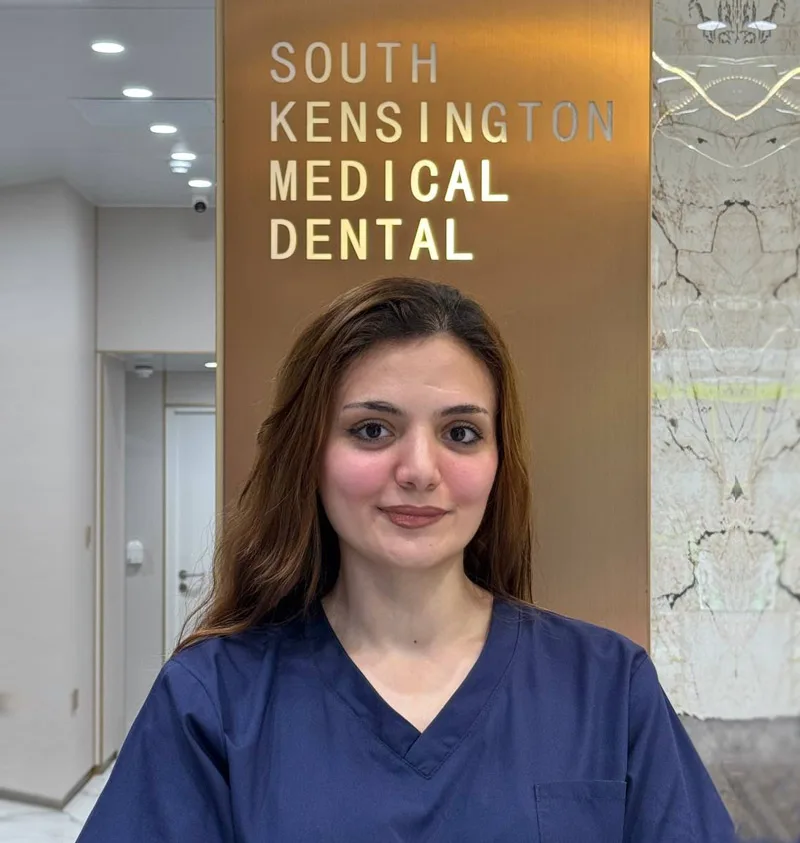
Meet Our Dental Team
Our experienced dental team is fully qualified and registered with the GDC, delivering safe, high-quality care in line with the highest professional standards.
Because our patients deserve nothing less.
If you are considering veneers to improve the appearance of your teeth, one of the first decisions you will face is the choice between porcelain and composite. Both types of veneer can transform your smile — but they differ in material, durability, aesthetic outcome, cost, and the amount of treatment involved.
Porcelain veneers are custom-made ceramic shells fabricated in a dental laboratory, offering exceptional durability and a highly natural appearance. Composite veneers are sculpted directly onto the tooth using resin material, often in a single appointment. The most suitable option depends on your cosmetic goals, budget, and the condition of your teeth.
This guide explains the key differences to help you make an informed decision. The best treatment will always depend on a clinical assessment by your dentist.
| Feature | Porcelain Veneers | Composite Veneers |
|---|---|---|
| Material Type | Ceramic / porcelain — fabricated in a dental laboratory | Composite resin — applied and sculpted directly onto the tooth |
| Coverage of Tooth | Thin shell bonded to the front surface of the tooth | Resin layer applied to the front surface of the tooth |
| Strength and Durability | Very strong — highly resistant to chipping and wear | Good — durable but more prone to chipping over time |
| Aesthetic Result | Highly natural — translucent, mimics real enamel closely | Natural appearance — good colour match but less translucent |
| Treatment Time | Two or more appointments (preparation + fitting) | Often completed in a single appointment |
| Cost (at Our Practice) | From £547.50 (member) / £1,095 per veneer | From £297.50 (member) / £595 per veneer |
| Longevity | 10–20 years or more with proper care | 5–10 years with proper care |
| Tooth Preparation Required | Thin layer of enamel removed — irreversible | Minimal or no enamel removal — often reversible |
| Suitability | Significant discolouration, chips, gaps, or shape changes | Minor cosmetic improvements, chips, small gaps |
Material Type
Porcelain
Ceramic / porcelain — fabricated in a dental laboratory
Composite
Composite resin — applied and sculpted directly onto the tooth
Coverage of Tooth
Porcelain
Thin shell bonded to the front surface of the tooth
Composite
Resin layer applied to the front surface of the tooth
Strength and Durability
Porcelain
Very strong — highly resistant to chipping and wear
Composite
Good — durable but more prone to chipping over time
Aesthetic Result
Porcelain
Highly natural — translucent, mimics real enamel closely
Composite
Natural appearance — good colour match but less translucent
Treatment Time
Porcelain
Two or more appointments (preparation + fitting)
Composite
Often completed in a single appointment
Cost (at Our Practice)
Porcelain
From £547.50 (member) / £1,095 per veneer
Composite
From £297.50 (member) / £595 per veneer
Longevity
Porcelain
10–20 years or more with proper care
Composite
5–10 years with proper care
Tooth Preparation Required
Porcelain
Thin layer of enamel removed — irreversible
Composite
Minimal or no enamel removal — often reversible
Suitability
Porcelain
Significant discolouration, chips, gaps, or shape changes
Composite
Minor cosmetic improvements, chips, small gaps
Porcelain veneers for long-lasting and natural-looking results are thin ceramic shells that are custom-made in a dental laboratory and bonded to the front surface of the teeth. They are designed to match the natural colour, translucency, and shape of your teeth, providing one of the most realistic and durable cosmetic dental treatments available.
The process typically requires two or more appointments. During the first visit, a thin layer of enamel is carefully removed to create space for the veneer, and impressions are taken. The veneers are then fabricated in a laboratory and bonded to the teeth at a second appointment, creating a natural and long-lasting result.
Porcelain veneers are suitable for patients who want to correct noticeable discolouration, chips, gaps, uneven teeth, or reshape their smile with a long-lasting result. Good oral health and adequate enamel thickness are required. They are ideal for patients seeking a comprehensive cosmetic improvement that will maintain its appearance for many years.
Composite veneers for improving the appearance of teeth are made from tooth-coloured resin that is applied directly to the tooth surface and sculpted by hand into the desired shape. Unlike porcelain veneers, composite veneers are typically completed in a single appointment, making them a quicker and more accessible cosmetic option.
The composite material is layered onto the tooth, shaped to achieve a natural appearance, and hardened with a curing light. Minimal or no enamel removal is usually required, making the process less invasive and often reversible. Composite veneers are a popular choice for patients seeking a noticeable improvement at a lower cost and with less treatment time.
Composite veneers are suitable for patients with minor cosmetic concerns — such as small chips, slight discolouration, minor gaps, or uneven edges. They are a good option for patients who want a visible improvement with minimal preparation, a shorter treatment time, and a lower financial commitment. They can also serve as a trial before committing to porcelain veneers.
Porcelain veneers are made from ceramic in a dental laboratory, providing exceptional precision and translucency. Composite veneers use resin material applied directly to the tooth by the dentist. The laboratory process produces a more refined result, while direct application offers convenience.
Porcelain is a harder, more durable material that resists chipping and wear better than composite resin. While composite veneers are functional and reliable for everyday use, they are more susceptible to damage over time, particularly on front teeth exposed to biting forces.
Porcelain veneers typically last 10–20 years or more, while composite veneers usually last 5–10 years. The longer lifespan of porcelain reflects the superior strength of the material and its resistance to staining and wear.
Porcelain veneers require a thin layer of enamel to be removed — this is irreversible. Composite veneers often require minimal or no enamel removal, making the procedure less invasive and sometimes reversible if the patient decides to change treatment in the future.
Porcelain offers a more natural translucency that closely mimics real tooth enamel, particularly in natural light. Composite veneers provide a good colour match but are slightly less translucent and may appear less natural in comparison. Both achieve a noticeable cosmetic improvement.
Composite veneers can often be completed in a single appointment, while porcelain veneers require two or more visits — one for preparation and impressions, and a second for fitting. Patients seeking a quicker result may prefer composite.
Composite veneers start from £297.50 per veneer for members (£595 standard). Porcelain veneers start from £547.50 per veneer for members (£1,095 standard). The higher cost of porcelain reflects the laboratory fabrication, material quality, and longer lifespan.
Porcelain veneers cost more due to laboratory fabrication, premium materials, and their longer lifespan. Composite veneers are more affordable and involve less treatment time. The total cost depends on the number of veneers and complexity of the case.
| Treatment | Member Price | Standard Price | Notes |
|---|---|---|---|
| Porcelain Veneer | From £547.50 | From £1,095 | Per veneer — lab-fabricated ceramic |
| Composite Veneer | From £297.50 | From £595 | Per veneer — direct resin application |
| Composite Bonding | From £197.50 | From £395 | Per tooth — for minor corrections |
Porcelain Veneer
Composite Veneer
Composite Bonding
When considering multiple veneers as part of a complete smile transformation, see our guide to smile makeover cost in London for a comprehensive pricing overview. Membership patients receive 50% off most treatments.
If you want a veneer that will maintain its appearance and strength for 10–20 years or more, porcelain veneers are the stronger and longer-lasting option — offering excellent stain resistance and durability.
Porcelain VeneersIf you want a noticeable cosmetic improvement in a single appointment at a lower cost, composite veneers offer a practical and effective solution — from £297.50 per veneer for members.
Composite VeneersIf preserving your natural tooth structure is a priority, composite veneers require minimal or no enamel removal and are often reversible. This makes them a less invasive and more flexible choice.
Composite VeneersIf you want the most natural-looking result with lifelike translucency and stain resistance, porcelain veneers provide a superior aesthetic outcome — closely mimicking the appearance of natural enamel.
Porcelain VeneersThe best way to determine whether porcelain or composite veneers are right for you is with a personalised consultation. Our cosmetic dental team will assess your teeth, discuss your goals, and recommend the most suitable option — book a consultation with a dentist in London to explore your options.
This page is intended for general educational purposes only and does not constitute personalised dental advice. Individual diagnosis and treatment recommendations require a clinical examination by a qualified dental professional. All treatment outcomes depend on individual clinical factors and cannot be guaranteed. The suitability of porcelain or composite veneers is determined during a clinical assessment. South Kensington Medical & Dental is registered with the Care Quality Commission (CQC) and all practitioners are registered with the General Dental Council (GDC).
Our experienced dental team is fully qualified and registered with the GDC, delivering safe, high-quality care in line with the highest professional standards.
Because our patients deserve nothing less.
At South Kensington Medical & Dental, we are fully registered with the Care Quality Commission (CQC) and our clinicians are registered with the relevant UK regulatory bodies, including the GDC and GMC. Our dentists, dental nurses and medical professionals deliver care that meets the highest clinical, safety and ethical standards, because our patients deserve nothing less.




We work with all major UK insurers including Bupa, AXA Health, Aviva, Cigna, Vitality, WPA, Unum and Boots Dental Plan. We'll provide the receipts and paperwork you need to claim back your treatment costs.