Jaw pain or clicking? Book a TMJ assessment.
Temporomandibular Disorder (TMD): TMJ Pain, Jaw Symptoms
South Kensington, London
Temporomandibular disorder (TMD) is a broad term describing conditions that affect the temporomandibular joint (TMJ) and the muscles responsible for jaw movement. TMJ pain may present as jaw joint discomfort, clicking, restricted opening, or tension headaches — and many individuals experience a combination of these symptoms. At our South Kensington dental practice, we provide structured jaw joint assessments to evaluate contributing factors and discuss appropriate management options, including splint or night guard discussion where clinically suitable.
Explore other dental conditions we assess or read on to understand TMD symptoms, contributing factors, and when a jaw joint evaluation may be helpful.
TMJ & Jaw Joint Assessment
Jaw movement analysis, muscle evaluation and splint discussion
- Jaw movement & range assessment
- Muscle palpation for tension
- Bite & occlusal analysis
- Tooth wear evaluation
- Splint suitability discussion
What Is Temporomandibular Disorder (TMD)?
Temporomandibular disorder — commonly referred to as TMD — is a collective term for conditions affecting the temporomandibular joint (TMJ) and the muscles that control jaw movement. The TMJ is the hinge joint connecting the lower jaw (mandible) to the temporal bone of the skull, located just in front of each ear. It is one of the most frequently used joints in the body, involved in speaking, chewing, yawning, and swallowing.
TMD may cause jaw joint pain, a clicking jaw, limited opening, or muscle tenderness. Symptoms can range from mild and intermittent to more persistent and disruptive. Because jaw discomfort can have multiple contributing factors — including muscular, joint-related, and bite-related origins — a clinical assessment is required to determine the most appropriate management approach.
TMJ pain is one of several dental conditions we assess at our South Kensington practice. A structured examination helps build a clinical picture and guides personalised management recommendations.
Common Symptoms of TMJ Pain and TMD
TMD symptoms vary between individuals and can fluctuate over time. The following are among the most commonly reported — though their presence does not automatically confirm a specific diagnosis without professional assessment.
Jaw Joint Pain
Clicking or Popping Jaw
Limited Jaw Movement
Associated Symptoms
What Can Contribute to TMD?
The exact cause of TMD is not always identifiable, and in many cases, several factors may interact. The following are among the most commonly recognised contributing factors:
Teeth grinding (bruxism) — sustained clenching places significant strain on the TMJ and surrounding muscles
Jaw clenching — particularly during concentration, stress, or physical exertion
Bite imbalance — when the upper and lower teeth do not meet evenly, the jaw may compensate
Stress-related muscle tension — heightened emotional tension can increase jaw muscle activity
Previous trauma — a blow to the jaw or face may affect joint function over time
Arthritis affecting the joint — degenerative or inflammatory conditions may contribute to TMJ symptoms
If you suspect teeth grinding may be contributing to your jaw symptoms, you may also wish to read about teeth grinding (bruxism) assessment.
How Dentists Assess TMJ Pain
When you attend our general dentistry practice with concerns about jaw joint pain, clicking, or discomfort when chewing, our team carries out a structured clinical evaluation. Assessment helps determine whether symptoms are muscular, joint-related, or bite-related — and guides management decisions accordingly.
Review of symptoms, onset, duration, and any triggers or patterns
Examination of jaw movement — opening range, deviation, and smoothness
Palpation of jaw muscles for tenderness, trigger points, and tension
Bite assessment to evaluate how the upper and lower teeth meet
Checking for tooth wear patterns that may suggest grinding or clenching
Radiographs where clinically indicated to evaluate joint and bone structures
Experiencing TMJ Pain or Jaw Clicking?
If you are experiencing ongoing TMJ pain, jaw clicking or discomfort when chewing, a dental assessment can help evaluate possible contributing factors and discuss suitable management options. Book a consultation at our South Kensington clinic for a structured jaw joint assessment.
Splint or Night Guard Discussion
Where clinical findings indicate that teeth grinding or clenching is contributing to TMJ pain, a stabilisation splint or custom night guard may be discussed. These appliances are precision-made from impressions of your teeth and designed to be worn during sleep.
A stabilisation splint aims to reduce strain on the jaw muscles, distribute biting forces more evenly across the teeth, and provide a protective barrier that helps prevent further tooth wear. It may also contribute to greater jaw comfort on waking for those who clench during sleep.
It is important to note that not all patients require a splint or night guard. Suitability depends on examination findings, the nature and severity of symptoms, and whether grinding or clenching is identified as a contributing factor. A splint does not cure TMD — rather, it serves as a supportive measure alongside other management strategies.
Masseter Muscle-Relaxing Injections for TMJ-Related Muscle Pain
Where TMJ symptoms are driven by an overactive masseter muscle (clenching or grinding), muscle-relaxing injections can partially relax the muscle to reduce bite force, ease jaw pain and tension headaches, and complement a splint. From £450, performed by Dr Carlos Stankiewicz.
Conservative Management Options
Many TMD symptoms respond well to non-invasive management strategies. The following approaches may help reduce discomfort, though they are not guaranteed solutions and individual responses can vary.
Jaw Exercises
Gentle stretching and mobility exercises can help reduce muscle tension and improve jaw joint comfort. Your dentist can demonstrate appropriate techniques and advise on frequency. These exercises aim to support more relaxed jaw posture rather than to resolve TMD itself.
Dietary Adjustments
Temporarily avoiding very hard, chewy, or tough foods can help reduce strain on the jaw joint and surrounding muscles. Cutting food into smaller pieces and favouring softer textures during symptomatic episodes may contribute to greater comfort.
Heat or Cold Application
Applying a warm compress to the jaw area can help relax tense muscles, while a cold pack may help reduce inflammation during acute flare-ups. Alternating between the two can sometimes provide additional relief.
Stress Management
Since stress is a commonly reported contributing factor, relaxation techniques — such as mindfulness, deep breathing, or regular exercise — may help reduce the frequency or intensity of jaw clenching. While these approaches do not address dental aspects directly, they can be a valuable part of an overall management plan.
Habit Awareness
Many individuals clench their jaw or hold tension during the day without realising — particularly while concentrating or during stressful moments. Becoming aware of jaw posture and consciously relaxing the jaw throughout the day can help reduce cumulative muscle strain.
Referral Pathway When Appropriate
Most cases of TMD can be assessed and managed within a general dental setting using conservative strategies. However, if symptoms do not improve with initial management, or if clinical findings suggest a more complex underlying issue, referral to an appropriate specialist may be recommended.
Depending on the nature of the presentation, this could include referral to a maxillofacial specialist or a musculoskeletal specialist with experience in temporomandibular disorders. Your dentist will discuss the most appropriate pathway based on clinical findings and your individual circumstances.
When Should You Arrange an Assessment?
Consider booking an evaluation if you recognise any of the following:
Jaw pain persists for several weeks without improvement
Clicking is accompanied by pain or difficulty opening
Jaw locking occurs — even if only intermittently
Chewing becomes consistently uncomfortable or painful
Headaches appear to be associated with jaw tension or clenching
If you experience acute jaw locking or severe pain that significantly limits jaw function, our emergency dentists are available for prompt assessment.
Frequently Asked Questions
About TMJ pain and temporomandibular disorder
Book a TMJ Assessment in South Kensington
Temporomandibular disorder (TMD) can cause jaw discomfort, clicking and muscle tension, but many cases can be managed conservatively following a structured assessment.
Our dental team in South Kensington provides careful jaw joint examinations and personalised advice, including splint discussion and referral guidance where appropriate. Book your appointment to have your TMJ symptoms assessed and discuss suitable next steps.
Open Monday–Sunday • 2 mins from South Kensington tube
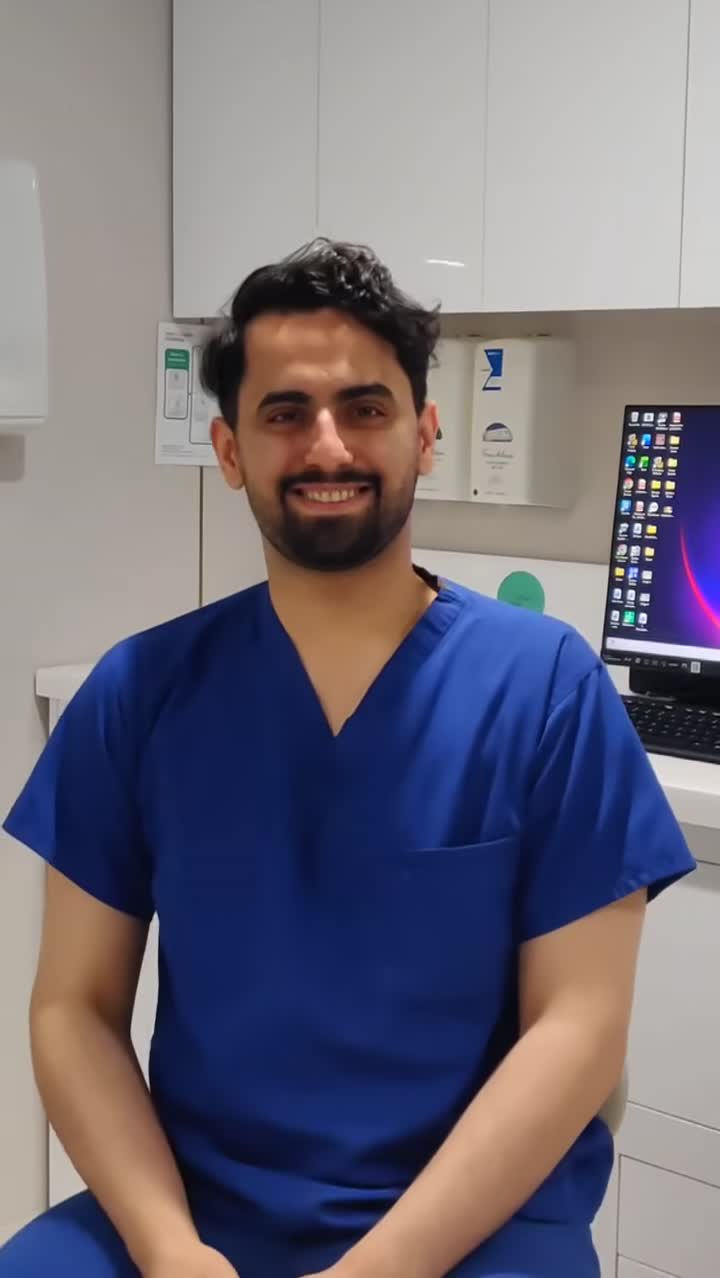
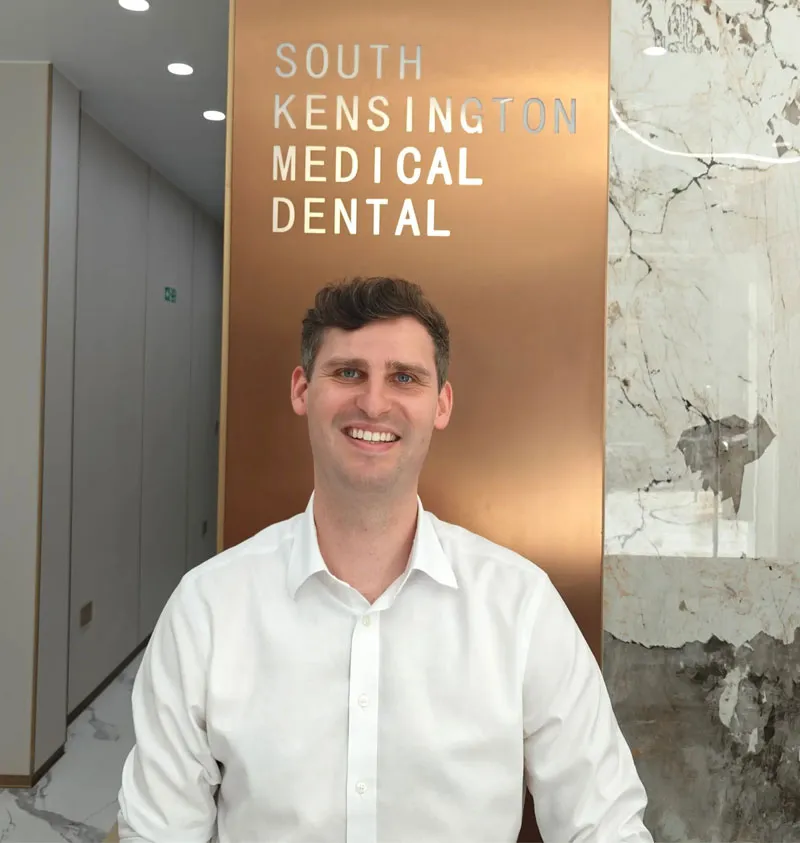
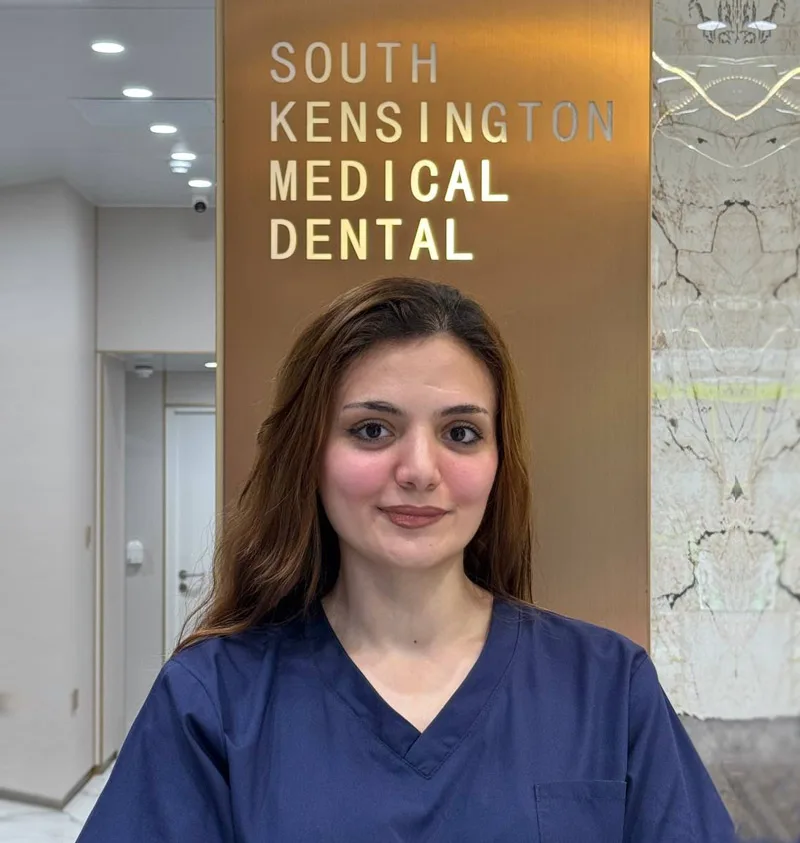
Meet Our Dental Team
Our experienced dental team is fully qualified and registered with the GDC, delivering safe, high-quality care in line with the highest professional standards.
Because our patients deserve nothing less.











Registered. Regulated. Trusted.
At South Kensington Medical & Dental, we are fully registered with the Care Quality Commission (CQC) and our clinicians are registered with the relevant UK regulatory bodies, including the GDC and GMC. Our dentists, dental nurses and medical professionals deliver care that meets the highest clinical, safety and ethical standards, because our patients deserve nothing less.


We Accept All Major Dental & Health Insurances
We work with all major UK insurers including Bupa, AXA Health, Aviva, Cigna, Vitality, WPA, Unum and Boots Dental Plan. We'll provide the receipts and paperwork you need to claim back your treatment costs.










