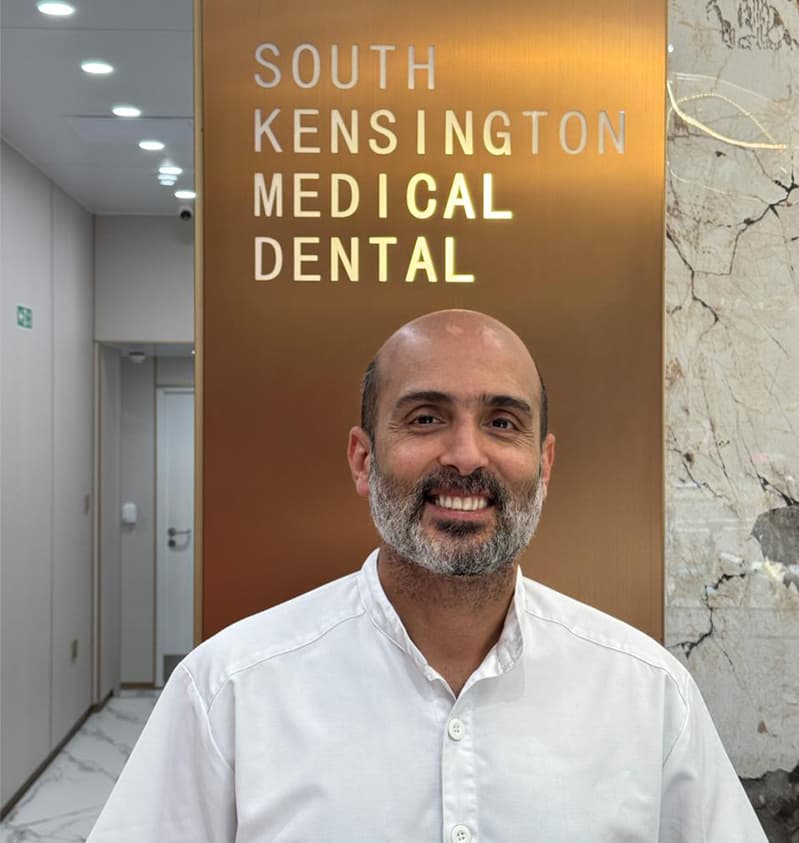
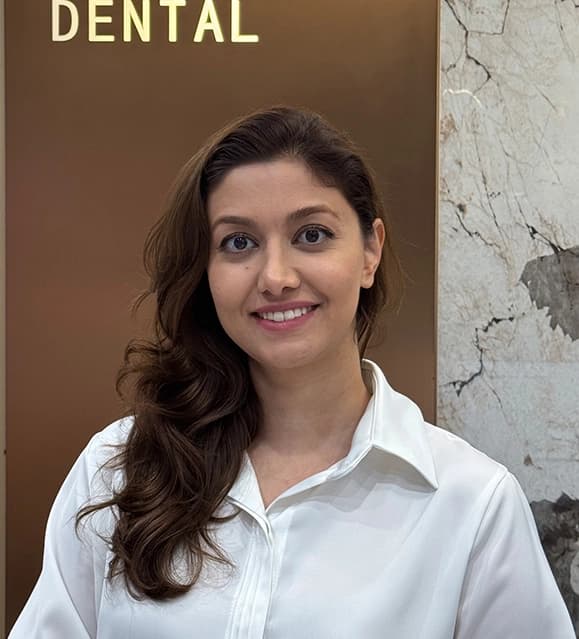
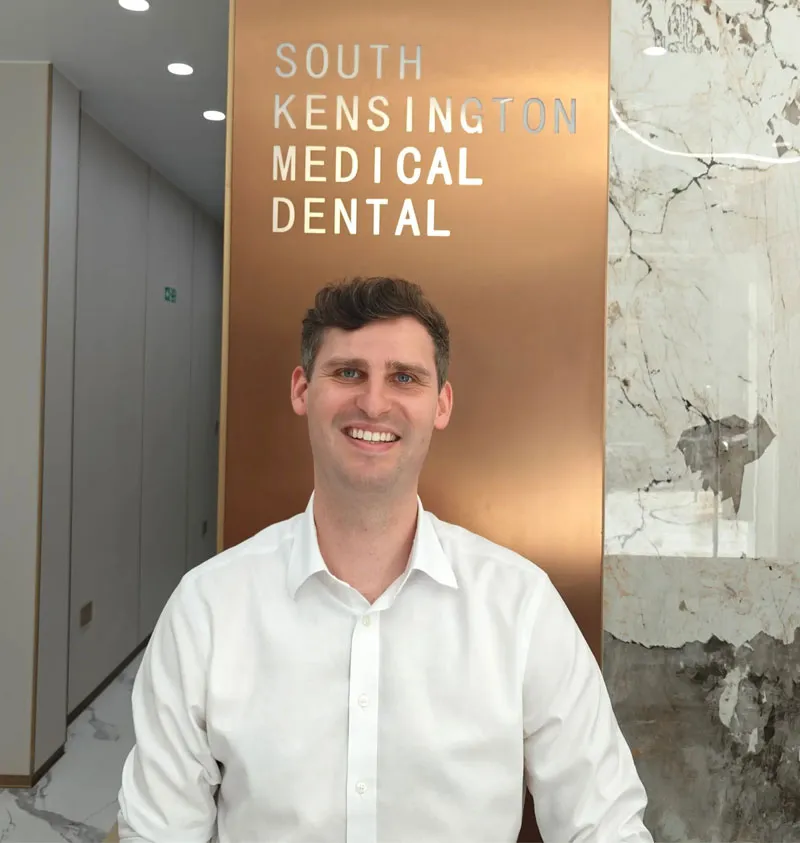
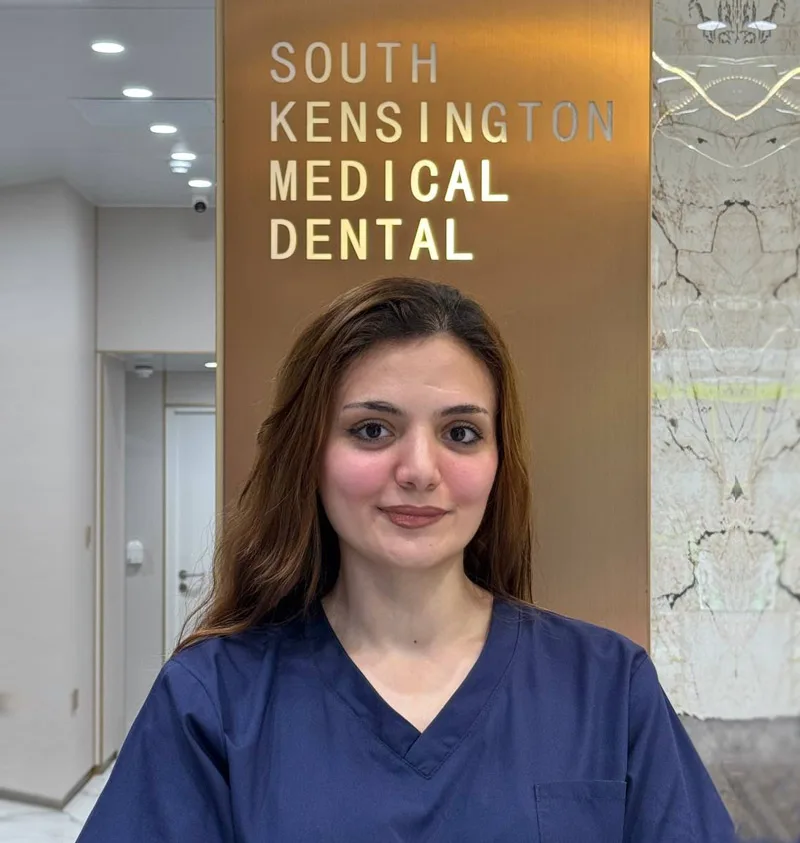
Meet Our Dental Team
Our experienced dental team is fully qualified and registered with the GDC, delivering safe, high-quality care in line with the highest professional standards.
Because our patients deserve nothing less.
If you want to improve the appearance of your smile, two of the most popular cosmetic dental treatments are veneers and teeth whitening. While both aim to enhance how your teeth look, they achieve very different results — and understanding the distinction is key to choosing the right option.
Veneers are custom-made shells bonded to the front of your teeth to improve their shape, colour, size, and alignment. Home teeth whitening uses custom trays and professional-grade gel to gradually lighten the natural colour of your teeth. The most suitable treatment depends on whether you want to change the colour of your teeth or transform their overall appearance.
This guide compares both options to help you make an informed decision. The best treatment will always depend on a clinical assessment by your dentist.
| Feature | Dental Veneers | Home Teeth Whitening |
|---|---|---|
| Purpose | Improve shape, colour, size, and alignment of teeth | Lighten the natural colour of teeth |
| Coverage of Tooth | Thin shell bonded to the front surface only | No coverage — whitening gel applied via custom trays |
| Strength and Durability | Durable — porcelain veneers are stain-resistant | No structural change — results fade over time |
| Aesthetic Result | Comprehensive — changes shape, colour, and alignment | Colour improvement only — no change to shape or size |
| Treatment Time | One appointment (composite) or two+ (porcelain) | Two to four weeks of daily home use |
| Cost (at Our Practice) | From £297.50 (member) / £595 per veneer (composite) | £199 (member) / £399 standard |
| Longevity | 5–10 years (composite) or 10–20 years (porcelain) | 6–12 months before top-up may be needed |
| Tooth Preparation Required | Minimal (composite) to thin enamel removal (porcelain) | None — non-invasive treatment |
| Suitability | Healthy teeth needing cosmetic transformation | Healthy teeth with surface staining or yellowing |
Purpose
Veneers
Improve shape, colour, size, and alignment of teeth
Whitening
Lighten the natural colour of teeth
Coverage of Tooth
Veneers
Thin shell bonded to the front surface only
Whitening
No coverage — whitening gel applied via custom trays
Strength and Durability
Veneers
Durable — porcelain veneers are stain-resistant
Whitening
No structural change — results fade over time
Aesthetic Result
Veneers
Comprehensive — changes shape, colour, and alignment
Whitening
Colour improvement only — no change to shape or size
Treatment Time
Veneers
One appointment (composite) or two+ (porcelain)
Whitening
Two to four weeks of daily home use
Cost (at Our Practice)
Veneers
From £297.50 (member) / £595 per veneer (composite)
Whitening
£199 (member) / £399 standard
Longevity
Veneers
5–10 years (composite) or 10–20 years (porcelain)
Whitening
6–12 months before top-up may be needed
Tooth Preparation Required
Veneers
Minimal (composite) to thin enamel removal (porcelain)
Whitening
None — non-invasive treatment
Suitability
Veneers
Healthy teeth needing cosmetic transformation
Whitening
Healthy teeth with surface staining or yellowing
Dental veneers for improving the appearance of front teeth are thin, custom-made shells bonded to the front surface of the teeth to improve their colour, shape, size, and alignment. Available in composite resin or porcelain, veneers provide a comprehensive cosmetic transformation — addressing multiple aesthetic concerns in a single treatment.
Composite veneers are sculpted directly onto the tooth, often in a single appointment with minimal enamel removal. Porcelain veneers are custom-fabricated in a dental laboratory and bonded at a second appointment, offering superior durability, stain resistance, and a highly natural translucency. Both types are colour-matched for a seamless result.
Veneers are suitable for patients with healthy teeth that need cosmetic improvement beyond what whitening can achieve — such as chips, gaps, uneven edges, minor misalignment, or persistent discolouration. Good oral health and adequate enamel thickness are required. Your dentist will assess suitability during a consultation.
Home teeth whitening treatment for safely brightening your smile uses custom-made trays and professional-grade whitening gel prescribed by your dentist. At our practice, we use the Boutique home whitening system — a trusted, dentist-supervised treatment that gradually lightens the natural colour of your teeth over two to four weeks of daily use at home.
During your initial appointment, impressions are taken to create custom trays that fit precisely over your teeth. You then apply the whitening gel at home — wearing the trays for a prescribed period each day. The gradual process produces natural-looking results, lightening teeth by several shades while minimising sensitivity.
Home teeth whitening is suitable for patients with healthy natural teeth who want to improve the colour of their smile. It is most effective for surface staining caused by food, drink, smoking, or natural ageing. Whitening is not effective on crowns, veneers, or other restorations, and may not be suitable for certain types of intrinsic discolouration. Your dentist will assess suitability before prescribing treatment.
Teeth whitening improves the colour of your natural teeth only — it cannot change their shape, size, or alignment. Veneers provide a comprehensive cosmetic transformation, addressing colour, shape, gaps, chips, and minor misalignment simultaneously. If your only concern is the shade of your teeth, whitening is usually the simpler and more appropriate option.
Whitening can lighten teeth by several shades but works within the natural structure of your teeth. Veneers allow your dentist to create an entirely new front surface — choosing the exact shape, size, colour, and alignment of each tooth. For patients seeking a more dramatic cosmetic change, veneers offer greater scope.
Whitening results typically last 6–12 months before a top-up may be needed, though the custom trays can be reused. Composite veneers last 5–10 years and porcelain veneers can last 10–20 years. Veneers offer a significantly longer-lasting cosmetic result compared to whitening.
Whitening is entirely non-invasive — no enamel is removed and the treatment is fully reversible. Composite veneers require minimal or no enamel removal. Porcelain veneers require a thin layer of enamel to be removed from the front surface, which is irreversible. Whitening is the least invasive option.
Whitening involves a single appointment for impressions, followed by two to four weeks of daily home use. Composite veneers can often be completed in one appointment. Porcelain veneers require two or more appointments for preparation, fabrication, and fitting. Whitening involves the simplest treatment process overall.
Both treatments can achieve excellent cosmetic results within their scope. Whitening produces a brighter, more uniform tooth colour. Veneers can create a completely new smile — correcting shape, symmetry, and alignment as well as colour. For purely colour-related concerns, whitening delivers a natural-looking result with no structural change.
Boutique home teeth whitening costs £199 for members (£399 standard) — a single fee covering both arches. Composite veneers start from £297.50 per veneer for members (£595 standard), and porcelain veneers from £547.50 per veneer for members (£1,095 standard). The total cost of veneers depends on the number of teeth treated.
Home teeth whitening is the more affordable option — a single fee covers both arches. Veneers are priced per tooth, so the total cost depends on the number of teeth treated and the material chosen. Both treatments are available at reduced rates for membership patients.
| Treatment | Member Price | Standard Price | Notes |
|---|---|---|---|
| Boutique Home Whitening | £199 | £399 | Both arches — custom trays included |
| Composite Veneer | From £297.50 | From £595 | Per veneer — direct resin application |
| Porcelain Veneer | From £547.50 | From £1,095 | Per veneer — lab-fabricated ceramic |
Boutique Home Whitening
Composite Veneer
Porcelain Veneer
For a detailed breakdown of whitening pricing, see our guide to teeth whitening cost in London. Membership patients receive 50% off most treatments.
If your teeth are healthy and your only concern is their shade, home teeth whitening is the most appropriate option — non-invasive, affordable, and effective for surface staining and yellowing.
Home WhiteningIf you want to correct chips, gaps, uneven edges, or minor misalignment as well as colour, veneers provide the comprehensive cosmetic transformation that whitening cannot achieve.
Dental VeneersIf preserving natural tooth structure is a priority, home teeth whitening is the least invasive option — no enamel removal and the treatment is fully reversible. Composite veneers also require minimal preparation.
Home WhiteningIf you want results that last for years without regular top-ups, veneers offer significantly greater longevity — porcelain veneers can last 10–20 years compared to 6–12 months for whitening.
Dental VeneersThe right choice between veneers and teeth whitening depends on your goals and the condition of your teeth. Our team will carry out a thorough assessment and recommend the most suitable treatment for your individual needs — book a consultation with a dentist in London to discuss your options.
This article is intended for general educational purposes only and does not constitute personalised dental advice. Individual diagnosis and treatment recommendations require a clinical examination by a qualified dental professional. All treatment outcomes depend on individual clinical factors and cannot be guaranteed. The suitability of veneers or teeth whitening is determined during a clinical assessment. South Kensington Medical & Dental is registered with the Care Quality Commission (CQC) and all practitioners are registered with the General Dental Council (GDC).
Our experienced dental team is fully qualified and registered with the GDC, delivering safe, high-quality care in line with the highest professional standards.
Because our patients deserve nothing less.
At South Kensington Medical & Dental, we are fully registered with the Care Quality Commission (CQC) and our clinicians are registered with the relevant UK regulatory bodies, including the GDC and GMC. Our dentists, dental nurses and medical professionals deliver care that meets the highest clinical, safety and ethical standards, because our patients deserve nothing less.




We work with all major UK insurers including Bupa, AXA Health, Aviva, Cigna, Vitality, WPA, Unum and Boots Dental Plan. We'll provide the receipts and paperwork you need to claim back your treatment costs.