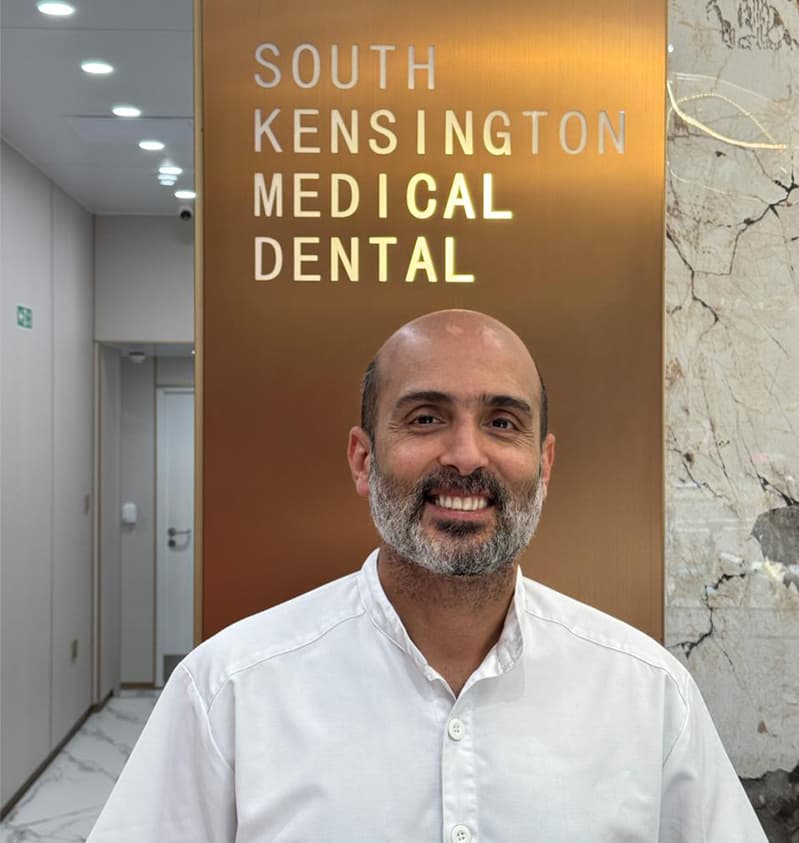
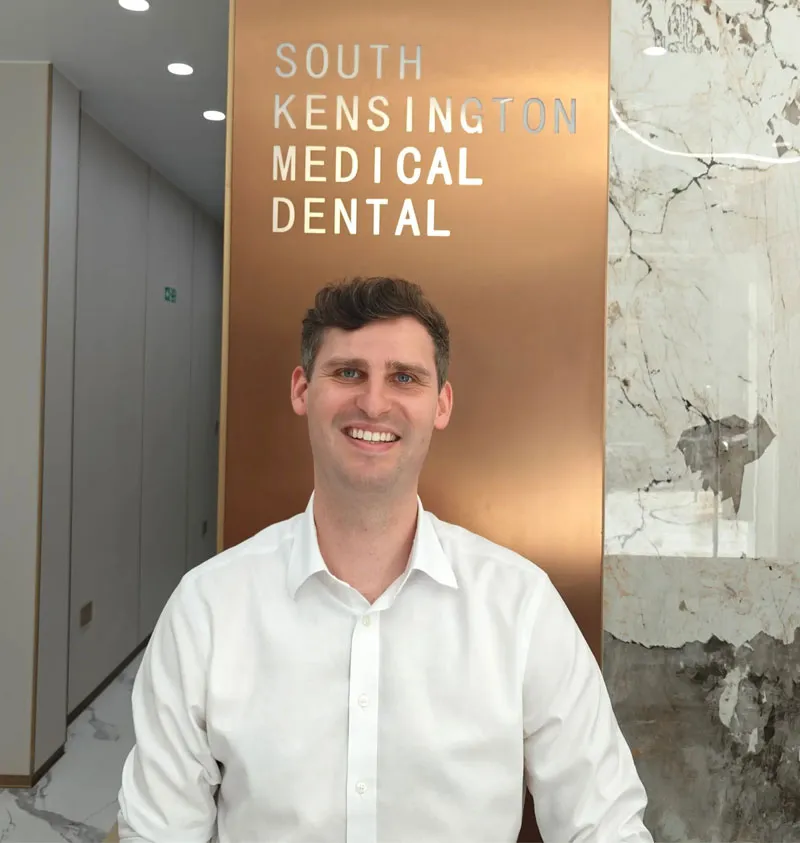
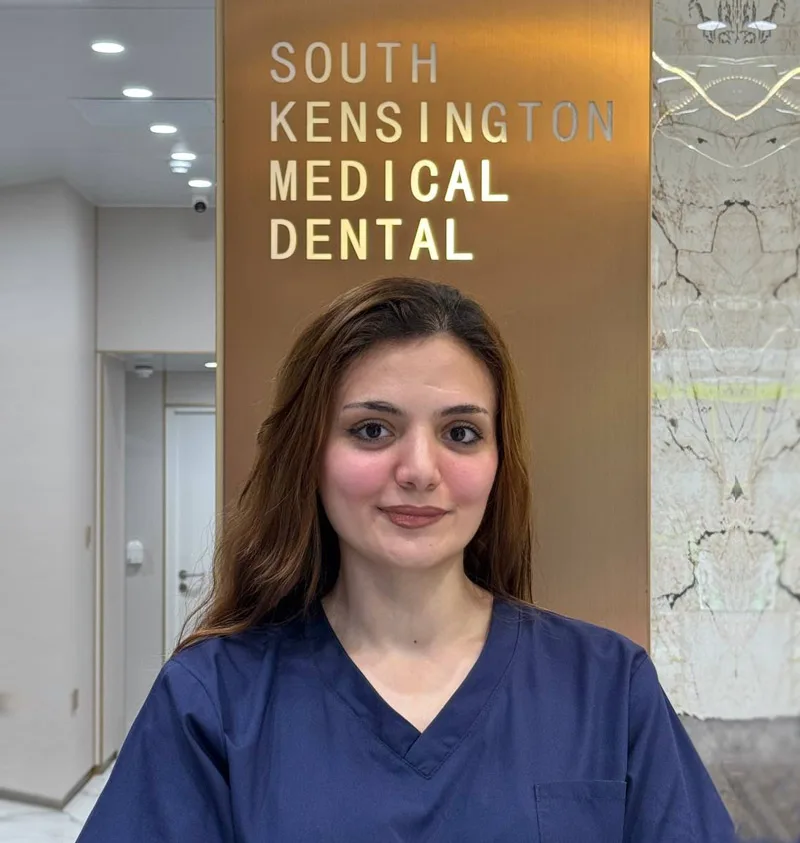
Meet Our Dental Team
Our experienced dental team is fully qualified and registered with the GDC, delivering safe, high-quality care in line with the highest professional standards.
Because our patients deserve nothing less.
Both white fillings for repairing cavities and minor tooth damage and dental inlays are used to restore teeth affected by decay — but they differ in strength, durability, and suitability depending on the size of the cavity.
Fillings are placed directly into the tooth during a single appointment and are ideal for small to moderate cavities. Inlays are custom-made in a dental laboratory and fitted over two visits, offering a stronger and longer-lasting solution for larger cavities — particularly on the biting surface of back teeth.
This guide explains the key differences to help you understand your options. The most suitable treatment will always depend on a clinical assessment by your dentist.
| Feature | Dental Fillings | Dental Inlays |
|---|---|---|
| Purpose | Repair small to moderate cavities | Restore moderate to large cavities with precision |
| Coverage of Tooth | Fills the cavity directly | Custom-fitted piece placed within the tooth cusps |
| Strength | Moderate — suitable for small to medium cavities | High — reinforces weakened tooth structure |
| Durability | 7–10 years for composite | 10–20 years depending on material |
| Aesthetic Result | Good — tooth-coloured composite blends well | Excellent — custom shade-matched in a laboratory |
| Treatment Time | Single appointment (30–45 minutes) | 2 appointments over 1–2 weeks |
| Cost (Per Tooth) | From £92.50 (member) / £185 | From £497.50 (member) / £995 |
| Longevity | 7–10 years with care | 10–20 years with care |
| Tooth Preparation | Minimal — decay removed and filled directly | Conservative — cavity shaped to receive custom piece |
| Best Suited For | Small to moderate cavities on any tooth | Moderate to large cavities where a filling may not be strong enough |
Purpose
Filling
Repair small to moderate cavities
Inlay
Restore moderate to large cavities with precision
Coverage of Tooth
Filling
Fills the cavity directly
Inlay
Custom-fitted piece placed within the tooth cusps
Strength
Filling
Moderate — suitable for small to medium cavities
Inlay
High — reinforces weakened tooth structure
Durability
Filling
7–10 years for composite
Inlay
10–20 years depending on material
Aesthetic Result
Filling
Good — tooth-coloured composite blends well
Inlay
Excellent — custom shade-matched in a laboratory
Treatment Time
Filling
Single appointment (30–45 minutes)
Inlay
2 appointments over 1–2 weeks
Cost (Per Tooth)
Filling
From £92.50 (member) / £185
Inlay
From £497.50 (member) / £995
Longevity
Filling
7–10 years with care
Inlay
10–20 years with care
Tooth Preparation
Filling
Minimal — decay removed and filled directly
Inlay
Conservative — cavity shaped to receive custom piece
Best Suited For
Filling
Small to moderate cavities on any tooth
Inlay
Moderate to large cavities where a filling may not be strong enough
A dental filling is a restorative treatment used to repair a tooth that has been damaged by decay. The decayed portion of the tooth is removed, and the resulting cavity is filled directly with a durable material — most commonly a tooth-coloured composite resin — to restore the tooth's shape and function.
Fillings are one of the most common dental treatments available. A composite filling is placed directly into the cavity during a single appointment, shaped by hand, and hardened with a curing light. Treatment typically takes 30–45 minutes per tooth and is suitable for small to moderate cavities on any tooth.
Dental fillings are appropriate for patients with small to moderate cavities where the remaining tooth structure is strong enough to support a direct restoration. They are the standard treatment for early to moderate decay and are suitable for both front and back teeth.
A dental inlay is a custom-made restoration fabricated in a dental laboratory and designed to fit precisely within the grooves of a tooth — between the cusps. Inlays are used to repair moderate to large cavities where a standard filling may not provide sufficient strength or durability.
The process typically requires two appointments. At the first visit, the dentist prepares the tooth and takes an impression, which is sent to a laboratory where the inlay is custom-fabricated from porcelain, composite resin, or gold. At the second visit, the inlay is bonded permanently into place. The result is a strong, precisely fitting restoration that reinforces the tooth.
Dental inlays are recommended for patients with moderate to large cavities on the biting surface of back teeth, where a direct filling may not provide enough strength. They are particularly suitable when the cavity is too large for a filling but not severe enough to require a full dental crown.
Fillings are placed directly into the tooth in a single visit. Inlays are custom-fabricated in a dental laboratory from an impression and require two appointments to complete.
Inlays are significantly stronger than direct fillings because they are made from hard-wearing materials in a laboratory. This makes them better suited for larger cavities under heavy biting forces.
Composite fillings typically last 7–10 years. Dental inlays can last 10–20 years depending on the material. Inlays offer a longer-lasting solution for moderate to large restorations.
Inlays are custom-made to fit the exact shape of the prepared cavity, reducing the risk of gaps or recurrent decay. Fillings are moulded by hand and may be less precise for larger cavities.
Composite fillings can shrink slightly as they harden, potentially creating micro-gaps between the filling and the tooth. Inlays are cured in a laboratory and do not shrink after placement.
Fillings start from £92.50 per tooth for members (£185 non-members). Inlays start from £497.50 (£995 non-members). Fillings are more affordable, while inlays offer greater durability for larger restorations.
Costs depend on the size of the cavity, the material used, and individual clinical needs. Below are the prices at our South Kensington practice.
| Treatment | Cost (Per Tooth) | Typical Lifespan |
|---|---|---|
| White Filling (Small) | From £92.50 (member) / £185 | 7–10 years |
| White Filling (Medium) | From £130 (member) / £260 | 7–10 years |
| White Filling (Large) | From £152.50 (member) / £305 | 7–10 years |
| Dental Inlay | From £497.50 (member) / £995 | 10–20 years |
White Filling (Small)
White Filling (Medium)
White Filling (Large)
Dental Inlay
Membership patients receive 50% off treatment costs. Final pricing depends on the extent of treatment, the material selected, and your individual treatment plan.
For small to moderate cavities, a composite filling is the most efficient and affordable solution — completed in a single appointment with minimal preparation.
Dental FillingFor moderate to large cavities on the biting surface of back teeth, an inlay offers greater strength, durability, and a more precise fit than a direct filling.
Dental InlayIf cost is a primary concern and the cavity is small to moderate in size, a composite filling is the more affordable option while still providing an effective restoration.
Dental FillingIf you want a longer-lasting restoration that minimises the risk of future replacement, a dental inlay typically lasts 10–20 years — significantly longer than a filling.
Dental InlayThe best way to determine which treatment is right for you is with a personalised consultation. Our dental team will examine your tooth and recommend the most appropriate restoration — book a consultation with a dentist in London to discuss your options.
This page is intended for general educational purposes only and does not constitute personalised dental advice. Individual diagnosis and treatment recommendations require a clinical examination by a qualified dental professional. All treatment outcomes depend on individual clinical factors and cannot be guaranteed. The suitability of fillings or inlays is determined during a clinical assessment. South Kensington Medical & Dental is registered with the Care Quality Commission (CQC) and all practitioners are registered with the General Dental Council (GDC).
Our experienced dental team is fully qualified and registered with the GDC, delivering safe, high-quality care in line with the highest professional standards.
Because our patients deserve nothing less.
At South Kensington Medical & Dental, we are fully registered with the Care Quality Commission (CQC) and our clinicians are registered with the relevant UK regulatory bodies, including the GDC and GMC. Our dentists, dental nurses and medical professionals deliver care that meets the highest clinical, safety and ethical standards, because our patients deserve nothing less.




We work with all major UK insurers including Bupa, AXA Health, Aviva, Cigna, Vitality, WPA, Unum and Boots Dental Plan. We'll provide the receipts and paperwork you need to claim back your treatment costs.