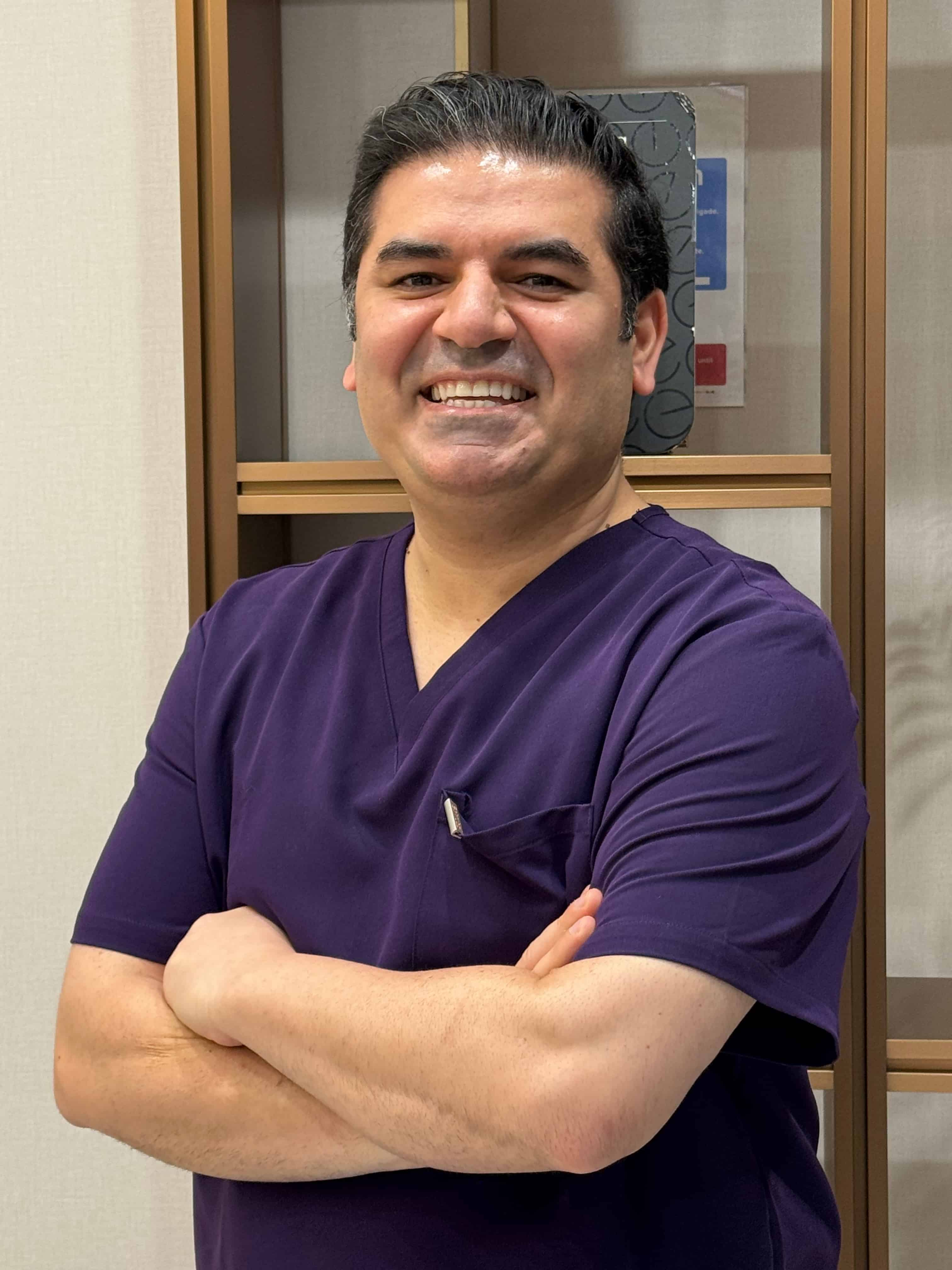
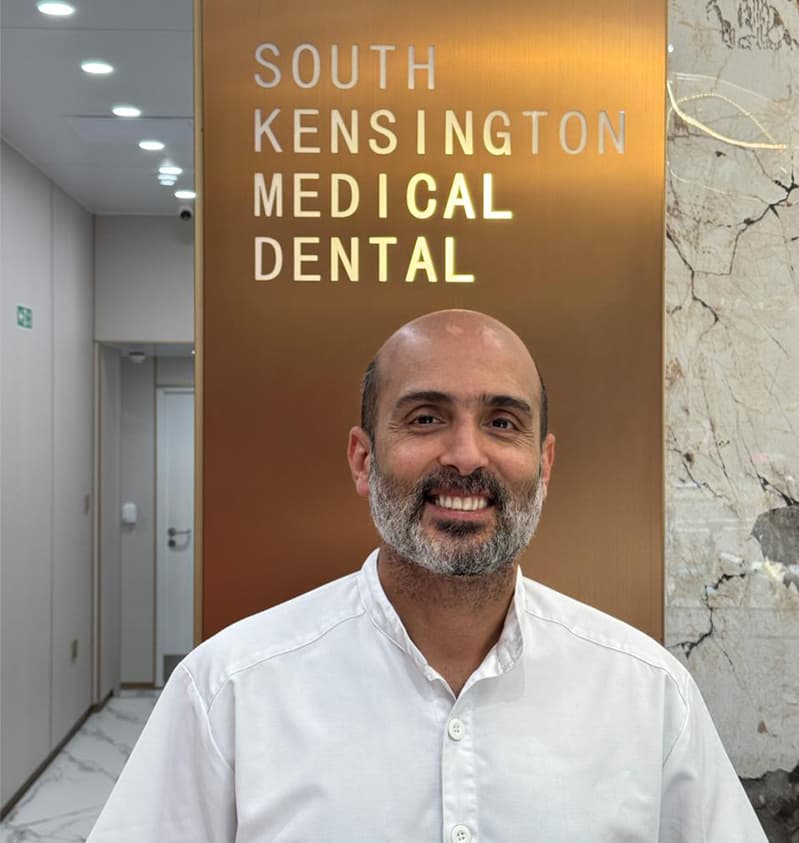
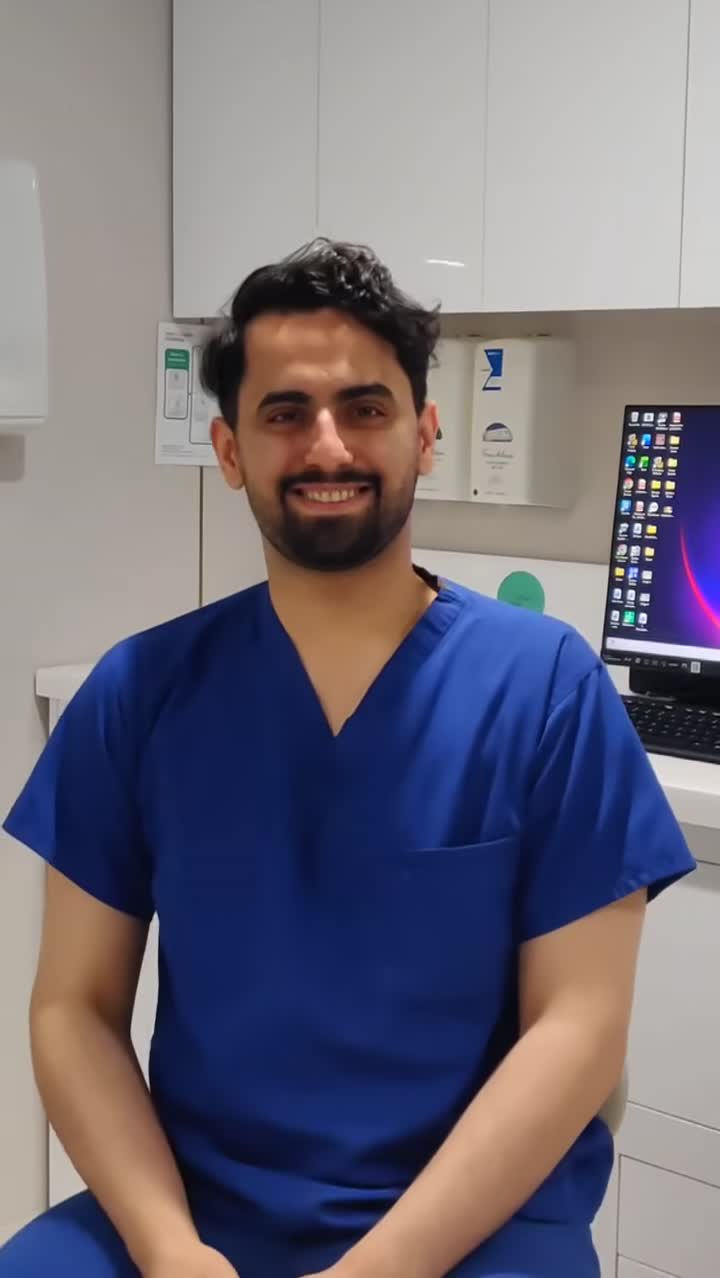
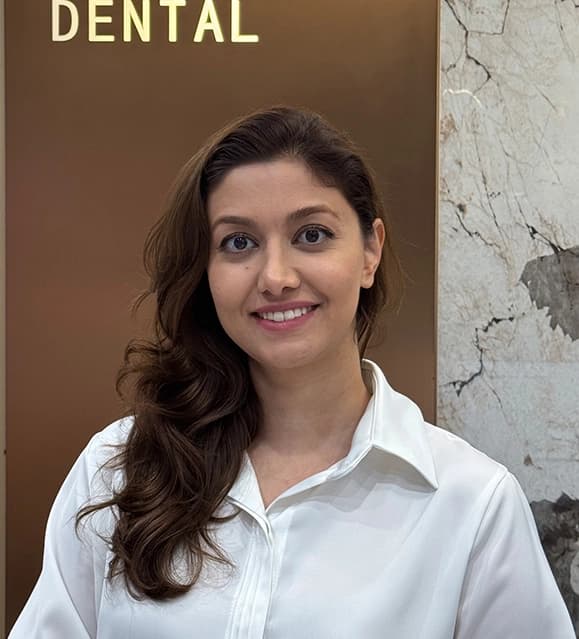
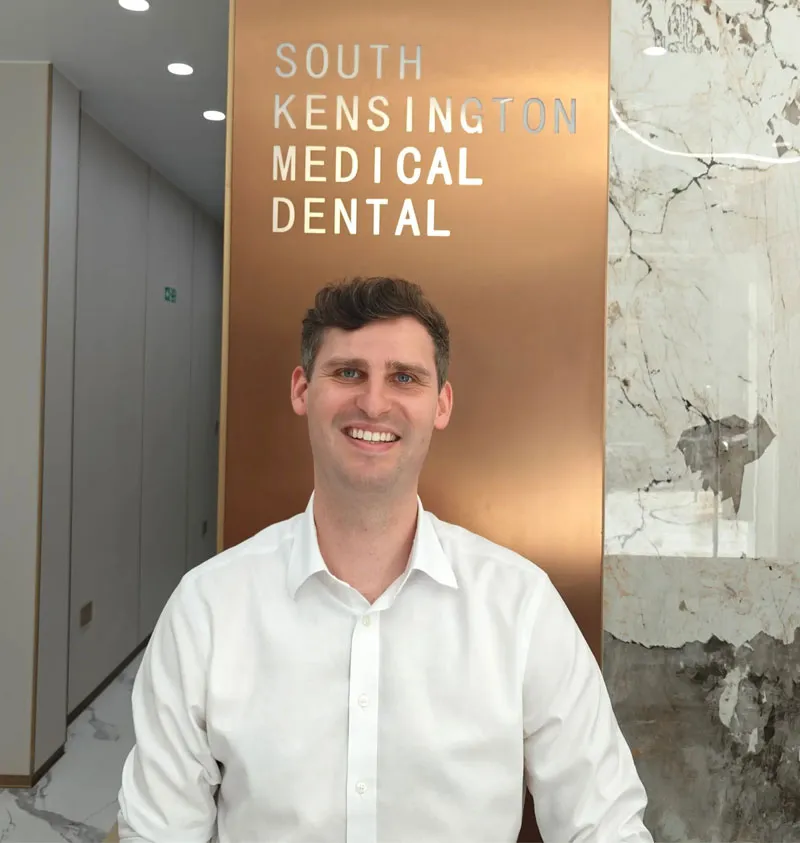
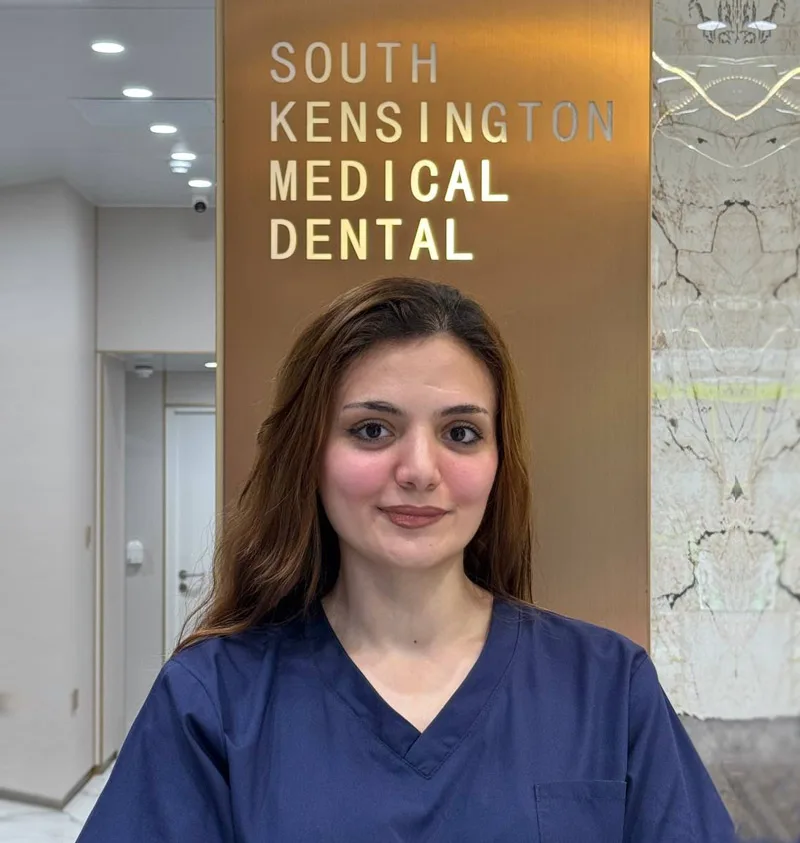
Meet Our Dental Team
Our experienced dental team is fully qualified and registered with the GDC, delivering safe, high-quality care in line with the highest professional standards.
Because our patients deserve nothing less.
When a tooth has sustained moderate to extensive damage, deciding between an onlay and a crown can feel unclear. Both are custom-made restorations designed to protect and strengthen your tooth — but they differ in how much of the tooth they cover and when each is most appropriate.
An onlay is a conservative option that covers one or more cusps while preserving more of your natural tooth structure. A crown encases the entire visible tooth, providing maximum protection for teeth that are more severely compromised. The right choice depends on how much healthy tooth remains and the type of damage involved.
This guide compares both options clearly. The most appropriate treatment will always depend on a clinical assessment by your dentist.
| Feature | Dental Onlays | Dental Crowns |
|---|---|---|
| Purpose | Restore moderate damage without full coverage | Restore heavily damaged or weakened teeth |
| Coverage of Tooth | Partial — covers one or more cusps | Full — covers the entire visible tooth |
| Strength | High — reinforces damaged cusps | Very high — encases the whole tooth |
| Durability | 10–20 years depending on material | 10–25+ years depending on material |
| Aesthetic Result | Natural — custom shade-matched | Natural — custom shade-matched |
| Treatment Time | 2 appointments over 1–2 weeks | 2 appointments over 1–2 weeks |
| Cost (Per Tooth) | From £497.50 (member) / £995 | From £497.50 (member) / £995 |
| Longevity | 10–20 years with care | 10–25+ years with care |
| Tooth Preparation | Conservative — preserves more natural tooth | More extensive — tooth reshaped to fit crown |
| Best Suited For | Moderate damage, large cavity, cracked cusp | Severe damage, root canal, structurally weakened teeth |
Purpose
Onlay
Restore moderate damage without full coverage
Crown
Restore heavily damaged or weakened teeth
Coverage of Tooth
Onlay
Partial — covers one or more cusps
Crown
Full — covers the entire visible tooth
Strength
Onlay
High — reinforces damaged cusps
Crown
Very high — encases the whole tooth
Durability
Onlay
10–20 years depending on material
Crown
10–25+ years depending on material
Aesthetic Result
Onlay
Natural — custom shade-matched
Crown
Natural — custom shade-matched
Treatment Time
Onlay
2 appointments over 1–2 weeks
Crown
2 appointments over 1–2 weeks
Cost (Per Tooth)
Onlay
From £497.50 (member) / £995
Crown
From £497.50 (member) / £995
Longevity
Onlay
10–20 years with care
Crown
10–25+ years with care
Tooth Preparation
Onlay
Conservative — preserves more natural tooth
Crown
More extensive — tooth reshaped to fit crown
Best Suited For
Onlay
Moderate damage, large cavity, cracked cusp
Crown
Severe damage, root canal, structurally weakened teeth
A dental onlay is a partial coverage restoration that protects damaged areas of a tooth. It is custom-made in a dental laboratory and bonded to the tooth, covering one or more cusps (the raised points on the biting surface) while preserving the healthy portions of the tooth that do not need treatment.
Onlays are used when the damage to a tooth is too extensive for a standard filling but does not require a full crown. They are sometimes referred to as partial crowns because they offer more coverage than a filling while being more conservative than a full crown. Onlays can be made from porcelain, ceramic, or composite resin and are shade-matched for a natural appearance.
Onlays are appropriate for patients with moderate tooth damage — such as a large cavity affecting one or more cusps, a cracked cusp, or an old filling that needs replacing — where the remaining tooth structure is still strong enough that a full crown is not necessary.
A dental crown is a custom-made cap that fits over the entire visible portion of a damaged or weakened tooth. It restores the tooth's shape, size, strength, and appearance while providing long-term structural protection against further damage.
Our clinic offers dental crowns for restoring damaged or weakened teeth in porcelain, zirconia, and metal-ceramic materials. Crowns are recommended when a tooth is too severely damaged or weakened for a partial restoration such as an onlay or filling — for example, after root canal treatment, a significant fracture, or extensive decay.
Crowns are recommended for patients with teeth that are cracked, fractured, heavily filled, or have undergone root canal treatment. They are the preferred option when a tooth has lost too much structure for an onlay or filling to provide adequate support.
An onlay covers only the damaged portion of a tooth — typically one or more cusps — preserving healthy structure. A crown encases the entire visible tooth, providing complete coverage and protection for severely compromised teeth.
Both restorations are strong and durable. Crowns offer the highest level of structural reinforcement as they encase the whole tooth. Onlays reinforce specific damaged areas and are well-suited for moderate damage where full coverage is not required.
Onlays require less removal of natural tooth structure — only the damaged area is prepared. Crowns require the tooth to be reshaped on all sides so the crown can fit over it, which involves removing more healthy enamel.
Crowns typically last 10–25 years depending on the material. Onlays generally last 10–20 years. Both depend on oral hygiene, location in the mouth, material choice, and habits such as teeth grinding.
Both porcelain crowns and porcelain onlays provide natural-looking results with custom shade-matching. Crowns offer a uniform appearance over the entire tooth, while onlays blend seamlessly with the surrounding natural structure.
Both treatments typically require two appointments — one for preparation and impressions, and a second to fit the restoration. The preparation for an onlay is generally less invasive than for a crown.
Onlays start from £497.50 per tooth for members (£995 non-members). Dental crowns — including porcelain, zirconia and metal-ceramic options — start from the same price point. The final cost depends on the material chosen and complexity of the case.
Costs depend on the extent of damage, the material selected, and the complexity of the restoration. Below are our current prices for onlays and crowns.
| Treatment | Member Price | Non-Member Price | Typical Lifespan |
|---|---|---|---|
| Dental Onlay | From £497.50 | From £995 | 10–20 years |
| Porcelain Crown | From £497.50 | From £995 | 10–15 years |
| Zirconia Crown | From £497.50 | From £995 | 15–25+ years |
| Metal-Ceramic Crown (PFM) | From £497.50 | From £995 | 15–20 years |
Dental Onlay
Member
From £497.50
Standard
From £995
Lifespan
10–20 years
Porcelain Crown
Member
From £497.50
Standard
From £995
Lifespan
10–15 years
Zirconia Crown
Member
From £497.50
Standard
From £995
Lifespan
15–25+ years
Metal-Ceramic Crown
Member
From £497.50
Standard
From £995
Lifespan
15–20 years
For a detailed breakdown of crown pricing, see our dental crown cost in London guide. Membership halves the cost of most treatments. Final costs are confirmed after a clinical assessment.
If your tooth has moderate damage but still retains healthy structure, an onlay conserves more of your natural tooth while providing strong, lasting protection.
Dental OnlayIf your tooth is cracked, fractured, or has undergone root canal treatment, a crown provides the full coverage and structural support needed to protect it long-term.
Dental CrownIf you need a restoration that will last 15–25+ years and withstand heavy biting forces, a zirconia or porcelain crown offers the greatest longevity and strength.
Dental CrownIf the damage is too large for a filling but does not require a full crown, an onlay is the ideal middle-ground restoration — strong, conservative, and long-lasting.
Dental OnlayThe best way to determine which restoration is right for your tooth is with a personalised clinical assessment. Our dental team will examine the extent of damage, discuss your options, and recommend the most appropriate treatment. You can book a consultation with a dentist in London at a time that suits you.
This article is intended for general educational purposes only and does not constitute personalised dental advice. Individual diagnosis and treatment recommendations require a clinical examination by a qualified dental professional. All treatment outcomes depend on individual clinical factors and cannot be guaranteed. The suitability of dental crowns or onlays is determined during a clinical assessment. South Kensington Medical & Dental is registered with the Care Quality Commission (CQC) and all practitioners are registered with the General Dental Council (GDC).
Our experienced dental team is fully qualified and registered with the GDC, delivering safe, high-quality care in line with the highest professional standards.
Because our patients deserve nothing less.
At South Kensington Medical & Dental, we are fully registered with the Care Quality Commission (CQC) and our clinicians are registered with the relevant UK regulatory bodies, including the GDC and GMC. Our dentists, dental nurses and medical professionals deliver care that meets the highest clinical, safety and ethical standards, because our patients deserve nothing less.

We work with all major UK insurers including Bupa, AXA Health, Aviva, Cigna, Vitality, WPA, Unum and Boots Dental Plan. We'll provide the receipts and paperwork you need to claim back your treatment costs.