Concerned about white spots? Book a preventive assessment.
Early Tooth Decay & White Spot Lesions
South Kensington, London
Early tooth decay and white spot lesions represent the earliest visible signs of enamel demineralisation — the process by which minerals are lost from the tooth surface before a cavity forms. At this stage, the enamel may appear chalky, opaque, or slightly discoloured, but there is typically no visible hole or structural damage. Importantly, early detection opens the door to preventive strategies that may help stabilise or slow the progression of the condition. At our South Kensington dental practice, our dentists carry out detailed caries risk assessments, provide tailored fluoride strategies, and develop personalised monitoring plans to support your long-term dental health.
Explore the full range of dental conditions we treat or read on to understand early tooth decay, white spot lesions, and how they can be managed.
Noticed Enamel Changes?
Early assessment supports preventive care
- Thorough clinical examination
- Personalised caries risk assessment
- Fluoride strategy discussion
- Oral hygiene and diet review
- Monitoring plan tailored to you
What Are White Spot Lesions?
White spot lesions are areas of enamel demineralisation — the earliest visible stage of tooth decay. They appear as chalky, opaque, or matte white patches on the tooth surface that contrast with the surrounding healthy, translucent enamel.
These lesions develop when acids produced by plaque bacteria dissolve minerals from the enamel faster than saliva can replace them. At this stage, the enamel surface may still be intact — there is no visible hole or cavity — but the underlying structure has been weakened.
White spots on teeth enamel are commonly seen after orthodontic treatment, where fixed braces may have made thorough cleaning more difficult. However, they can appear on any tooth surface where plaque has accumulated over time. Recognising white spot lesions early is significant because it represents a window of opportunity for preventive management before the damage progresses to early cavities requiring restorative treatment.
What Causes Early Tooth Decay?
Several factors can contribute to the demineralisation process that leads to early decay and white spot lesions.
Plaque Build-Up
Plaque is a sticky film of bacteria that constantly forms on the teeth. When plaque is not removed through regular brushing, the bacteria metabolise sugars and produce acids that gradually dissolve minerals from the enamel surface, initiating the demineralisation process.
Frequent Sugar Exposure
Each time you consume sugary foods or drinks, the bacteria in plaque produce a burst of acid that lasts approximately 20–30 minutes. Frequent sugar exposure throughout the day means the enamel is under repeated acid attack, with limited time for natural repair between exposures.
Inadequate Oral Hygiene
Inconsistent or ineffective brushing allows plaque to accumulate, particularly along the gum line, between teeth, and in other hard-to-reach areas. Without thorough daily cleaning, the conditions for early decay become more favourable.
Dry Mouth
Saliva plays a critical protective role — it washes away food particles, neutralises acids, and provides minerals that support enamel repair. Conditions, medications, or lifestyle factors that reduce saliva flow can significantly increase the risk of early demineralisation.
Orthodontic Braces
Fixed orthodontic appliances create additional surfaces where plaque can accumulate, and brackets and wires can make thorough brushing more challenging. White spot lesions around brackets are a well-recognised concern during and after orthodontic treatment.
How to Recognise Early Signs of Demineralisation
Early demineralisation can be subtle and may not cause any discomfort. Being aware of the following signs can help you seek assessment before the condition progresses:
Early tooth decay may not cause pain or obvious symptoms. Regular dental examinations remain the most reliable way to detect changes that are not yet visible to the untrained eye.
Why Early Assessment Matters
Identifying early tooth decay before a cavity forms can make a meaningful difference in how the condition is managed:
Opportunity for preventive management
At the white spot stage, preventive strategies — rather than restorative treatment — may be appropriate. This represents the most conservative approach to managing early decay.
May help reduce progression to a cavity
With appropriate fluoride use, improved oral hygiene, and dietary adjustments, the demineralisation process may be slowed or stabilised in some cases.
Personalised risk assessment
A caries risk assessment helps identify the specific factors contributing to your decay risk, allowing your dentist to tailor advice and preventive measures to your individual situation.
Monitoring over time
Regular review allows your dentist to track whether white spot lesions are stable, improving, or progressing — and to adjust the preventive plan accordingly.
Noticed White Spots on Your Teeth?
If you have seen changes in your enamel or are concerned about early decay, our South Kensington dentists can provide a detailed examination and preventive care plan.
How We Assess Early Tooth Decay
Our assessment goes beyond simply looking for cavities. We take a comprehensive approach to understanding your individual decay risk:
Clinical examination to identify areas of enamel change
Caries risk assessment based on your individual risk factors
Diet and oral hygiene review to identify contributing habits
Digital imaging if required to evaluate any areas of concern beneath the surface
Discussion of a personalised monitoring and preventive care plan
The findings from this assessment inform a personalised preventive plan. Not all early lesions will progress — the goal is to identify those at risk and provide appropriate support.
Prevention & Fluoride Strategy
Managing early tooth decay centres on preventive measures designed to support the natural remineralisation process and reduce the factors driving demineralisation.
Professional Fluoride Applications
Fluoride treatment for teeth in a clinical setting uses higher-concentration preparations than are available in over-the-counter products. Professional fluoride applications help strengthen weakened enamel and support the remineralisation process — the natural mechanism by which minerals are redeposited into demineralised areas. This is used as part of a broader preventive plan rather than as a standalone treatment.
Fluoride Toothpaste Advice
Your dentist can advise on the most appropriate fluoride toothpaste concentration for your individual needs. For most adults, a toothpaste containing at least 1,350 ppm fluoride is recommended. In some cases, a higher-strength prescription toothpaste may be suggested. Consistent daily use is important for maintaining the protective effect.
Oral Hygiene Optimisation
Effective plaque removal is fundamental to preventing tooth decay. Our dental team can review your brushing technique, recommend suitable interdental cleaning aids, and provide targeted advice for cleaning around orthodontic appliances or other areas where plaque tends to accumulate.
Dietary Advice
Reducing the frequency of sugar intake is one of the most effective ways to prevent tooth decay. This includes limiting sugary snacks between meals, reducing consumption of acidic drinks such as fruit juices and fizzy drinks, and allowing adequate time between eating episodes for saliva to neutralise acids and support enamel repair.
Monitoring & Review
Regular follow-up appointments allow your dentist to track the stability of white spot lesions, assess whether the preventive plan is working, and make adjustments where needed. The frequency of review depends on your individual risk level. Learn more about our routine dental check-ups and how they support long-term oral health.
Can Early Tooth Decay Be Reversed?
In the earliest stages of demineralisation — before the enamel surface has broken down — the process can sometimes be slowed, stabilised, or partially reversed through remineralisation. This occurs when minerals such as calcium and phosphate, supported by fluoride, are redeposited into the weakened enamel.
With appropriate preventive care — including professional fluoride applications, improved oral hygiene, and dietary adjustments — the appearance of white spot lesions may improve over time in some cases. However, it is important to note that not all early lesions will respond in the same way, and visible improvement cannot be guaranteed.
Once the enamel surface has broken down and a cavity has formed, the damage is irreversible and restorative treatment — such as a filling — will be necessary. This is why early detection and professional guidance are so valuable in managing the condition at the most conservative stage possible.
When Does Early Decay Become a Cavity?
If the conditions driving demineralisation persist — continued plaque accumulation, frequent sugar exposure, and inadequate fluoride protection — the weakened enamel will eventually break down, forming a visible hole or cavity in the tooth surface.
At this point, the damage is structural and cannot be repaired by the body’s natural processes. The decayed material needs to be removed and the tooth restored — typically with a white filling using tooth-coloured composite resin.
The transition from early decay to a cavity can be gradual, and there is often no sudden onset of pain to signal the change. Regular dental examinations and professional monitoring help identify this progression at the earliest opportunity, allowing for the most conservative treatment approach.
Preventing Future Demineralisation
Ongoing preventive care is the most effective way to protect your teeth from further demineralisation:
Consistent fluoride use
Brush twice daily with fluoride toothpaste and follow any additional fluoride recommendations from your dentist, such as fluoride mouth rinses or professional applications.
A balanced, tooth-friendly diet
Reduce the frequency of sugary and acidic foods and drinks. Allow time between meals for saliva to neutralise acids and support the remineralisation process.
Professional monitoring
Attend dental check-ups at the intervals recommended by your dentist. Regular review allows early changes to be detected and preventive plans to be adjusted as needed.
Managing dry mouth
If you experience reduced saliva flow — whether due to medications, health conditions, or other factors — discuss this with your dentist. Strategies to support saliva production can help protect against demineralisation.
Frequently Asked Questions
About early tooth decay and white spot lesions
Book an Early Decay Assessment in South Kensington
If you are concerned about white spots or early signs of enamel change, our experienced dental team can provide careful assessment and discuss appropriate preventive strategies.
Open Monday–Sunday • 2 mins from South Kensington tube
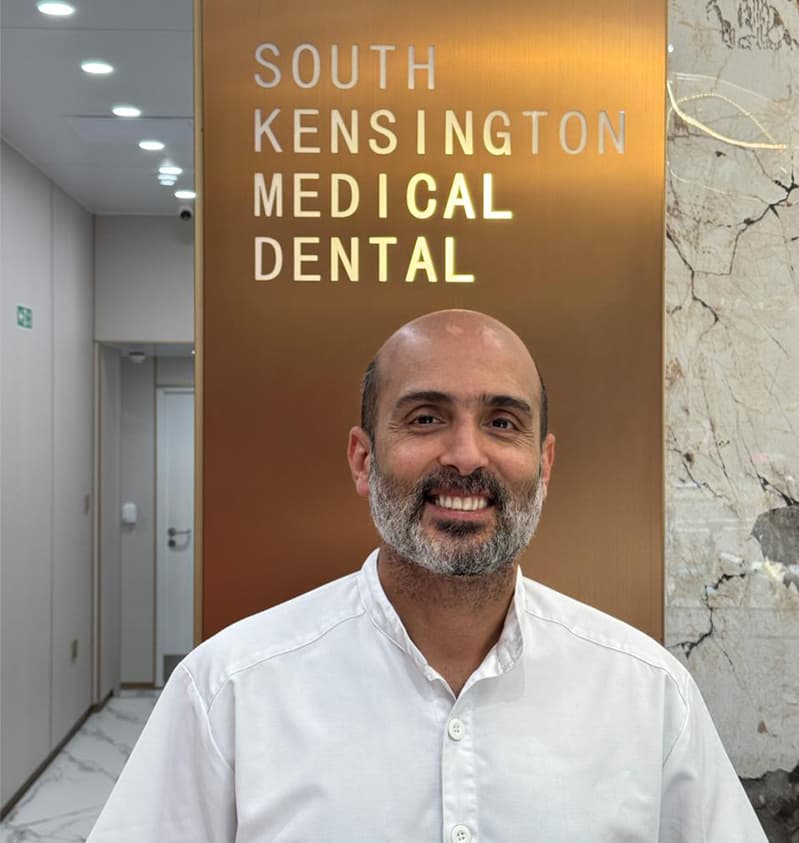
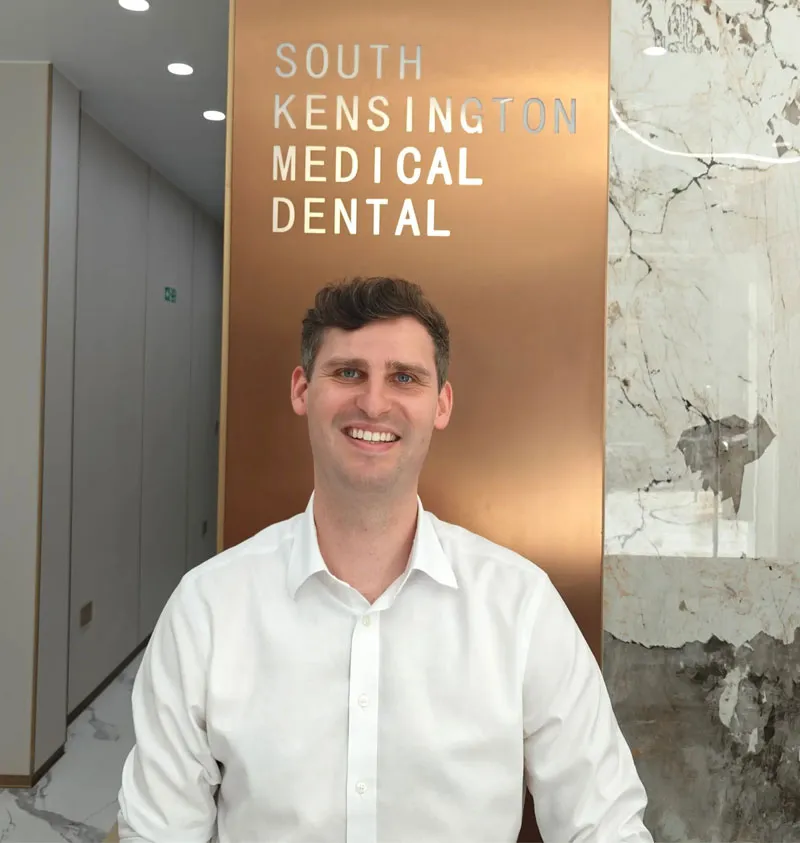
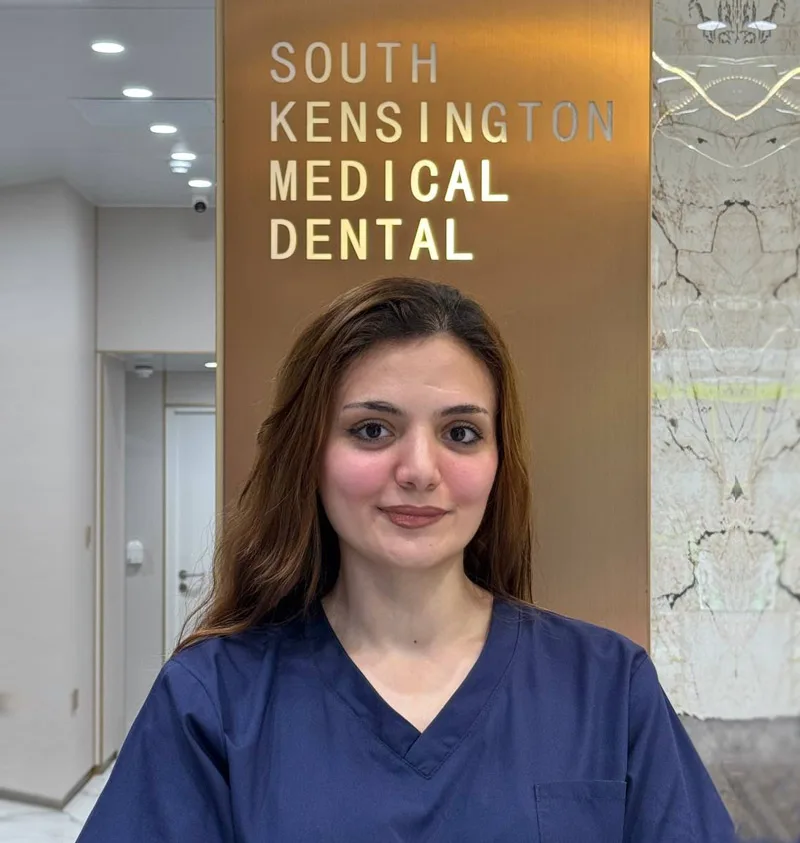
Meet Our Dental Team
Our experienced dental team is fully qualified and registered with the GDC, delivering safe, high-quality care in line with the highest professional standards.
Because our patients deserve nothing less.











Registered. Regulated. Trusted.
At South Kensington Medical & Dental, we are fully registered with the Care Quality Commission (CQC) and our clinicians are registered with the relevant UK regulatory bodies, including the GDC and GMC. Our dentists, dental nurses and medical professionals deliver care that meets the highest clinical, safety and ethical standards, because our patients deserve nothing less.


We Accept All Major Dental & Health Insurances
We work with all major UK insurers including Bupa, AXA Health, Aviva, Cigna, Vitality, WPA, Unum and Boots Dental Plan. We'll provide the receipts and paperwork you need to claim back your treatment costs.










