Acrylic vs. Chrome vs. Valplast: Which Partial Denture Is Right for You?
If you are missing one or more teeth, you may have already started exploring your options for a partial denture. It is one of the most common questions patients bring to dental appointments — and one of the most frequently searched dental topics online. With several types of removable partial denture available, understanding the differences can feel overwhelming.
This article provides a balanced, educational comparison of acrylic, cobalt chrome, and Valplast (flexible nylon) dentures, covering how they differ in design, fit, durability, aesthetics, and suitability. If you are also weighing up whether a dental bridge or denture would be more appropriate, that comparison may also be helpful. The most appropriate option will always depend on a thorough clinical assessment.
Which Partial Denture Material Is Most Suitable?
The most suitable partial denture depends on your clinical needs, the number of missing teeth, the health of your remaining teeth, and your lifestyle preferences. Acrylic dentures are often the most affordable, cobalt chrome dentures tend to offer greater strength and a thinner fit, and Valplast flexible dentures provide a metal-free, lightweight alternative. A dentist can recommend the most appropriate option following a full oral examination.
Why Replacing Missing Teeth Matters
Missing teeth can affect more than just your smile. When gaps are left unfilled, the remaining teeth may gradually shift position over time, potentially altering your bite and making oral hygiene more difficult. Chewing efficiency can also be reduced, and the jawbone may begin to change — learn more about how missing teeth can cause bone loss or facial changes. See also: what happens if you leave a missing tooth untreated.
Understanding Acrylic Partial Dentures
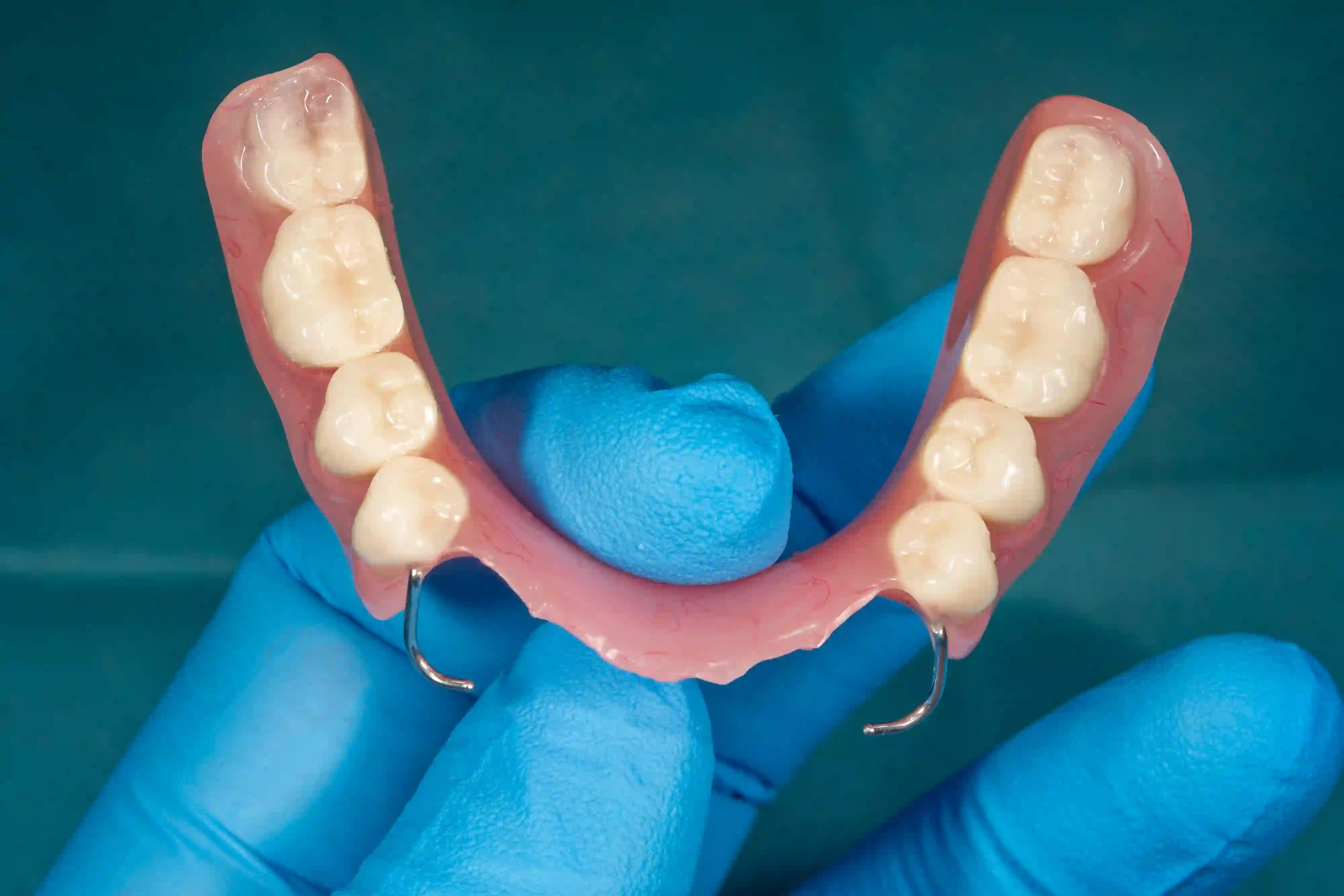
Acrylic partial dentures are among the most commonly provided types in the UK. They consist of a gum-coloured acrylic base that supports prosthetic teeth, often held in place with small metal clasps.
- Material: Polymethyl methacrylate (PMMA), a type of dental-grade plastic
- Appearance: Gum-coloured base with colour-matched prosthetic teeth
- Fit: Slightly bulkier than chrome alternatives
- Cost: Generally the most affordable option
Acrylic dentures can be a practical choice, particularly for patients who need a temporary solution or for those replacing teeth where aesthetics are less of a concern. Over time, the acrylic material may be more prone to wear or fracture compared to metal-based alternatives.
Understanding Cobalt Chrome Partial Dentures
Cobalt chrome partial dentures use a cast metal framework as their structural foundation. This metal skeleton supports the acrylic base and prosthetic teeth, providing a strong and precise fit.
- Material: Biocompatible cobalt-chromium alloy
- Design: Custom-cast thin metal framework for a precise, slim fit
- Retention: Carefully designed clasps distribute biting forces more evenly
- Longevity: Highly resistant to fracture with a longer functional lifespan
Many patients and professionals favour cobalt chrome for its slim profile, which makes it feel less intrusive. However, metal clasps may be visible in certain positions, and the denture requires sufficient healthy teeth to support the framework.
Understanding Valplast (Flexible) Partial Dentures
Valplast dentures are made from a flexible, biocompatible nylon material. They have grown in popularity due to their aesthetic appeal and comfort.
- Material: Thermoplastic nylon resin — lightweight and flexible
- Appearance: Entirely metal-free with translucent, gum-coloured nylon — one of the most discreet options
- Retention: Thin nylon extensions grip around teeth, virtually invisible
- Comfort: Flexibility adapts to natural mouth movements
Valplast dentures can be a suitable choice for patients concerned about aesthetics or with metal sensitivities. However, they may not be suitable for replacing large numbers of teeth and can be more challenging to reline or adjust.
Comparing the Three Options at a Glance
| Feature | Acrylic | Cobalt Chrome | Valplast |
|---|---|---|---|
| Material | Dental-grade plastic (PMMA) | Cobalt-chromium alloy + acrylic | Flexible nylon resin |
| Thickness | Thicker base | Thin metal framework | Thin and flexible |
| Aesthetics | Visible metal clasps possible | Visible metal clasps possible | Metal-free, highly discreet |
| Durability | Moderate | High | Moderate |
| Comfort | May take adjustment | Generally comfortable | Often very comfortable |
| Adjustability | Easily adjusted or relined | Can be modified | Difficult to reline |
| Cost | Most affordable | Higher | Mid to higher range |
| Best suited for | Temporary or straightforward cases | Many clinical situations | Aesthetic zone, metal-free preference |
This table provides a general overview. Individual suitability depends on clinical factors that can only be assessed by a dental professional.
The Dental Science Behind Partial Denture Design
When a tooth is lost, the alveolar ridge gradually resorbs — a process known as alveolar remodelling. A well-designed partial denture must account for support, retention, stability, and tissue health. Each material handles these factors differently: chrome frameworks distribute forces through rests on natural teeth, acrylic dentures rest more on soft tissue, and Valplast dentures rely on flexibility. Maintaining healthy gums is also important for denture support. This is why a clinical examination is essential.
When Professional Dental Assessment May Be Needed
- Loose or ill-fitting denture that moves during eating or speaking
- Sore spots or persistent discomfort under a denture
- Difficulty chewing with current denture
- Visible damage — cracks, chips, or broken clasps
- New tooth loss requiring denture update
- Gum redness, swelling, or tenderness beneath or around a denture
Prevention and Oral Health Advice for Denture Wearers
- Clean your denture daily using a soft brush and denture-specific cleaning solution
- Remove your denture at night to give your gums a chance to rest
- Brush your remaining natural teeth thoroughly twice a day with fluoride toothpaste
- Clean your gums and tongue gently, even in areas where teeth are missing
- Rinse your denture after meals when possible
- Handle with care — clean over a folded towel or basin of water
- Attend regular dental check-ups to monitor fit and oral health
Key Points to Remember
- Acrylic partial dentures are generally the most affordable and suitable for straightforward cases
- Cobalt chrome dentures offer a thinner, stronger framework with better force distribution
- Valplast flexible dentures provide a metal-free, discreet alternative, particularly in the smile zone
- No single material is universally superior — the right choice depends on your clinical situation
- Good denture hygiene and regular dental reviews are essential for comfort and oral health
- A clinical examination is always necessary before a denture can be recommended
Frequently Asked Questions
How long does a partial denture last?
The lifespan varies depending on the material, maintenance, and natural changes in your mouth. Cobalt chrome dentures tend to be the most durable, often lasting many years. Acrylic and Valplast dentures may need replacing sooner. Regular dental reviews help assess when a reline, repair, or replacement might be appropriate.
Are flexible dentures better than acrylic dentures?
Whether a flexible denture is better depends entirely on clinical needs. Flexible dentures are often preferred for comfort and discreet appearance, particularly in visible areas. However, they may not provide sufficient structural support for all situations and can be more difficult to modify. Your dentist can explain which option is more appropriate following assessment.
Can I eat normally with a partial denture?
Most patients find they can eat a wide range of foods comfortably once adjusted to wearing a partial denture. There may be an initial adaptation period. Very hard or particularly sticky foods may require more care. If you experience persistent difficulty eating, have the fit reviewed by your dentist.
Will a partial denture look natural?
Modern partial dentures are designed to look as natural as possible. Prosthetic teeth are colour-matched to your existing teeth, and the base material resembles natural gum tissue. Valplast dentures are often considered the most aesthetically discreet due to their translucent, metal-free design.
Do I still need to visit the dentist if I wear a denture?
Yes, regular dental visits remain important. Your dentist will check remaining teeth and gums, assess the denture fit, and look for early signs of oral health changes. The bone and tissue supporting a denture continue to change over time, which can affect the fit.
How do I know which partial denture is right for me?
The most suitable partial denture depends on several clinical factors, including the number and position of missing teeth, the condition of your remaining teeth, the health of your gums and jawbone, and your personal preferences regarding comfort and appearance. Your dentist will carry out a thorough examination and recommend a treatment plan tailored to your individual needs.
Considering a partial denture? Book a consultation to discuss which option may be most suitable for you.
Book Denture ConsultationThis article is intended for general informational purposes only and does not constitute dental advice, diagnosis, or treatment recommendation. South Kensington Medical & Dental is regulated by the Care Quality Commission (CQC). All dentists are registered with the General Dental Council (GDC). Medical practitioners are registered with the General Medical Council (GMC).
Ready to Book an Appointment?
Our team is here to help you with all your dental and medical needs.










