Wisdom Tooth Pain: How to Manage the Pain
Wisdom tooth pain is one of the most common dental complaints among adults, particularly between the ages of 17 and 25 when these third molars typically begin to emerge. The discomfort can range from a dull, persistent ache at the back of the jaw to sharp, throbbing pain that radiates across the face. For some, the pain is brief and settles on its own. For others, it may signal a developing issue that requires professional attention.
This guide explains the common causes of wisdom tooth pain, outlines practical steps that may help manage discomfort at home, and clarifies the situations in which seeking a professional dental assessment is advisable.
What Causes Wisdom Tooth Pain?
The underlying cause of wisdom tooth pain depends on the position and condition of the tooth. Understanding why the pain has developed can help you make more informed decisions about how to respond.
Normal Eruption Discomfort
As wisdom teeth push through the gum tissue, it is normal to experience some degree of soreness, tenderness, and mild swelling. The gum tissue over the emerging tooth may feel irritated, and the surrounding area can become slightly inflamed. This type of discomfort is usually temporary and tends to ease once the tooth has fully emerged. It may come and go over weeks or months as the tooth moves through the gum in stages.
Pericoronitis
Pericoronitis is an infection of the soft tissue surrounding a partially erupted wisdom tooth. When a wisdom tooth only partially breaks through the gum, a flap of tissue — known as an operculum — can form over the crown. This flap creates a pocket where food debris and bacteria can become trapped, leading to localised infection and inflammation. Symptoms may include pain, swelling, difficulty opening the mouth, and an unpleasant taste. Pericoronitis can recur and may worsen with each episode if the underlying cause is not addressed.
Impaction
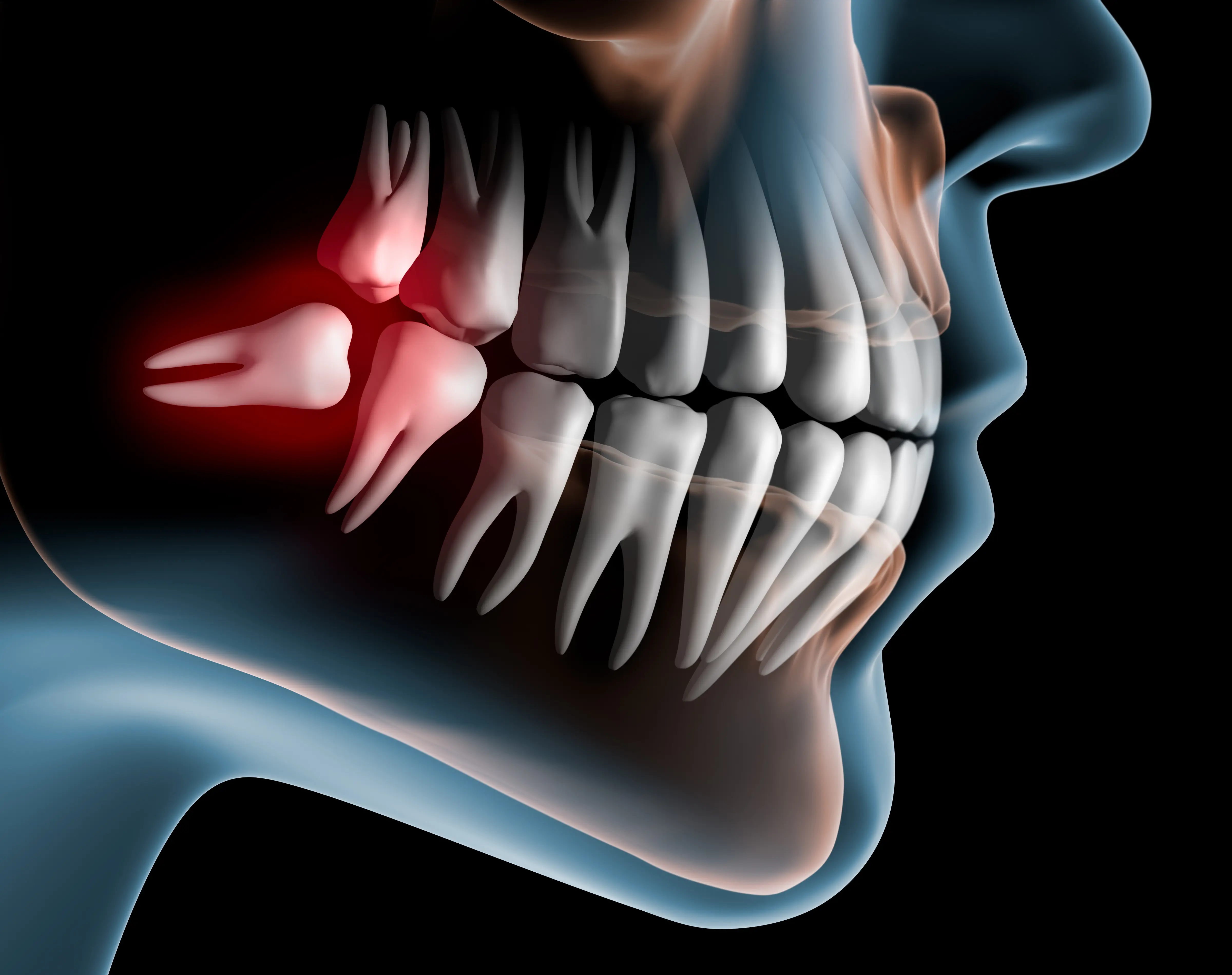
When there is insufficient space in the jaw for a wisdom tooth to emerge fully, it may become impacted — growing at an angle, pressing against the adjacent tooth, or remaining partially or fully embedded within the jawbone. Impacted wisdom teeth can cause persistent pressure, aching pain in the jaw, and sometimes damage to neighbouring teeth. The pain may be intermittent but tends to become more frequent or intense over time if the tooth remains impacted.
Decay
Wisdom teeth sit at the very back of the mouth, making them particularly difficult to clean effectively with a toothbrush and floss. This can lead to plaque accumulation and eventual decay. A decayed wisdom tooth may cause sharp pain, sensitivity to hot and cold, or a persistent throbbing ache. Because of their position, filling a wisdom tooth may not always be practical, and wisdom tooth removal is often the recommended course of action.
Gum Disease Around the Wisdom Tooth
The gum tissue around wisdom teeth can be more susceptible to inflammation and periodontal issues, particularly when the tooth has only partially erupted or is difficult to keep clean. Swollen, red, or bleeding gums around a wisdom tooth may indicate localised gum disease, which can contribute to ongoing discomfort.
How to Manage Wisdom Tooth Pain at Home
Whilst professional assessment is always appropriate for persistent or severe wisdom tooth pain, there are several measures that may help manage discomfort in the short term. These approaches are intended as temporary relief and should not replace professional dental care.
1. Warm Salt Water Rinses
Rinsing with warm salt water is one of the simplest and most widely recommended home remedies for oral discomfort. Dissolve approximately half a teaspoon of salt in a glass of warm water and gently swish around the affected area for 30 seconds before spitting out. Salt water can help reduce bacteria around the gum line, ease minor swelling, and provide a gentle soothing effect. This can be repeated several times a day, particularly after meals.
2. Over-the-Counter Pain Relief
Standard over-the-counter pain relief such as ibuprofen or paracetamol may help manage wisdom tooth pain. Ibuprofen, being an anti-inflammatory, can be particularly useful when swelling is present. Always follow the dosage instructions on the packaging, and consult a pharmacist if you are unsure whether a particular medication is suitable for you. Pain relief should be used as a short-term measure while you arrange professional advice — it does not address the underlying cause of the pain.
3. Cold Compress
Applying a cold compress to the outside of the cheek near the affected area may help reduce swelling and numb the discomfort temporarily. Wrap a few ice cubes in a clean cloth or use a gel ice pack, and hold it against the jaw for 15 to 20 minutes at a time. Avoid applying ice directly to the skin. Cold compresses can be used intermittently throughout the day, allowing the skin to return to normal temperature between applications.
4. Keep the Area Clean
Maintaining good oral hygiene around the wisdom tooth is important, even when the area is sore. Gently brush the tooth and surrounding gum using a soft-bristled toothbrush, taking care not to aggravate any inflamed tissue. If brushing is too uncomfortable, rinsing with an antiseptic mouthwash or warm salt water after meals can help reduce bacterial buildup. Keeping the area clean can help prevent the worsening of an infection and may reduce the intensity of symptoms.
5. Avoid Triggering Foods
Certain foods and drinks can worsen wisdom tooth pain. Very hot or cold beverages, sugary foods, hard or crunchy items, and acidic foods may all aggravate sensitivity and discomfort. Sticking to softer, lukewarm foods and chewing on the opposite side of the mouth can help minimise irritation while the area is tender.
6. Clove Oil
Clove oil contains eugenol, a natural compound with mild analgesic and antiseptic properties. Applying a small amount of clove oil to a cotton ball and placing it against the affected area may provide temporary numbing relief. Use clove oil sparingly, as excessive application can cause irritation to the surrounding soft tissue. This is a short-term remedy and is not a substitute for professional dental treatment.
When Home Remedies Are Not Enough
Home remedies are intended to provide temporary comfort. If your pain persists beyond a few days, worsens, or is accompanied by swelling, fever, difficulty swallowing, or pus discharge, you should seek professional dental assessment promptly. Delaying treatment in these circumstances may allow the condition to worsen.
When Should You See a Dentist?
Whilst mild, intermittent discomfort during wisdom tooth eruption can be normal, certain symptoms indicate that professional dental assessment is advisable. You should consider arranging an appointment if you experience any of the following:
- Pain that persists for more than a few days or is progressively worsening
- Swelling of the gum, cheek, or jaw on the affected side
- Difficulty opening your mouth or pain when swallowing
- An unpleasant taste in the mouth or discharge around the wisdom tooth
- Pain that radiates to the ear, temple, or across the jaw
- Recurrent episodes of pain or swelling in the same area
- Fever or a general feeling of being unwell alongside dental pain
These symptoms may suggest pericoronitis, impaction, decay, or the formation of an abscess. A dentist can examine the tooth, take appropriate radiographs if needed, and provide a diagnosis along with a clear treatment plan. Early assessment can often prevent a manageable issue from developing into something more complex.
If symptoms are severe — particularly significant facial swelling, difficulty breathing or swallowing, or high fever — it may be appropriate to seek urgent assessment from an emergency dentist or attend a hospital emergency department.
Does Wisdom Tooth Pain Always Mean Removal?
Not necessarily. Wisdom tooth pain does not automatically mean that the tooth needs to be removed. If the pain is caused by normal eruption and the tooth is growing in a good position with adequate space, the discomfort may resolve on its own once the tooth has fully emerged. In these cases, maintaining good oral hygiene and monitoring the area may be all that is required.
However, removal may be recommended in situations where the tooth is impacted, causing recurrent infections, decayed, or damaging adjacent teeth. The decision to proceed with wisdom teeth removal is always made following a thorough clinical examination and, where appropriate, radiographic assessment. Your dentist will discuss the options with you, explain the potential benefits and risks, and support you in making an informed decision about your care.
What to Expect During a Wisdom Tooth Assessment
If you attend a dental appointment for wisdom tooth pain, the dentist will typically begin by discussing your symptoms, their duration, and any aggravating factors. A clinical examination of the mouth will be carried out, during which the dentist will assess the position of the wisdom tooth, the condition of the surrounding gum tissue, and whether there are signs of infection or decay.
In many cases, a dental radiograph — commonly a periapical or panoramic X-ray — may be taken to assess the root structure, the position of the tooth within the jaw, and its relationship to adjacent teeth and nerves. This imaging helps the dentist determine whether the tooth is impacted, whether there is underlying decay, and what the most appropriate treatment approach may be.
Following the assessment, the dentist will explain the findings and discuss the available options. These may range from monitoring the tooth and managing symptoms conservatively, to prescribing a course of antibiotics for active infection, to recommending extraction if indicated. All options, expected outcomes, and potential risks will be explained clearly to help you make a well-informed decision.
Can Wisdom Tooth Pain Come and Go?
Yes, it is quite common for wisdom tooth pain to be intermittent. During eruption, the tooth may move in stages, causing periodic discomfort that settles and then returns. Similarly, pericoronitis often follows a pattern of flare-ups, with episodes of pain and swelling that improve with good hygiene or a course of antibiotics, only to recur weeks or months later.
Intermittent pain does not necessarily mean the problem has resolved. If you experience recurring episodes, it may indicate that the underlying issue — whether impaction, partial eruption, or chronic infection — remains. Seeking dental advice, even between episodes, can help establish whether ongoing monitoring or treatment is appropriate.
Preventing Wisdom Tooth Problems
Whilst it is not possible to prevent the way wisdom teeth develop or whether they become impacted, there are steps you can take to reduce the likelihood of complications:
- Maintain a thorough oral hygiene routine, paying particular attention to the back of the mouth where wisdom teeth are located
- Use an interdental brush or floss to clean between the wisdom tooth and the adjacent molar, where food debris commonly accumulates
- Attend regular dental check-ups so that your dentist can monitor the development and position of your wisdom teeth over time
- Seek prompt advice if you notice persistent pain, swelling, or changes around the wisdom tooth area rather than waiting for symptoms to worsen
Summary
Wisdom tooth pain is a common experience that can arise from a variety of causes, including normal eruption, pericoronitis, impaction, decay, and gum disease. Whilst mild discomfort during eruption may resolve on its own, persistent, severe, or recurrent pain should be assessed by a dental professional to determine the underlying cause and the most appropriate course of action.
Home measures such as warm salt water rinses, over-the-counter pain relief, cold compresses, and careful oral hygiene can provide temporary relief, but they do not replace professional assessment and treatment. If you are experiencing wisdom tooth pain that is affecting your daily life, or if you notice warning signs such as swelling, difficulty opening your mouth, or fever, arranging a dental appointment is a sensible and proactive step.
If you are experiencing wisdom tooth discomfort and would like professional advice, our dental team at South Kensington Medical & Dental can carry out a thorough assessment and discuss appropriate options. You can contact the clinic on 020 7183 2362 or book an appointment online.
Disclaimer: This article is for general informational purposes only and does not constitute dental advice, diagnosis, or treatment recommendations. Every patient's situation is different, and the information provided should not be used as a substitute for professional clinical assessment. Home remedies described in this article are temporary measures and may not be appropriate for all individuals. All treatment decisions should be made in consultation with a qualified dental professional following a thorough clinical examination. South Kensington Medical & Dental is regulated by the Care Quality Commission (CQC). All dentists are registered with the General Dental Council (GDC).
Ready to Book an Appointment?
Our team is here to help you with all your dental and medical needs.










