Toothache Treatment: Best Painkillers and When to See a Dentist
Tooth pain can strike without warning. Whether it is a sharp jolt when drinking cold water or a constant, dull ache that keeps you awake at night, toothache is one of the most common reasons people seek emergency dental care.
This guide covers the most common causes of toothache, over-the-counter painkillers, home remedies, when stronger dentist-prescribed medication may be needed, and — importantly — when professional assessment is essential.
What Causes Toothache?
Toothache is a symptom, not a diagnosis. Several underlying conditions can cause dental pain, including:
- Tooth decay (cavities) — bacteria erode enamel and reach the sensitive inner layers of the tooth
- Dental abscess — a pocket of infection at the root of a tooth or in the gums
- Cracked or chipped tooth — exposes the nerve and causes sharp pain
- Gum disease — inflammation or infection of the tissues supporting the teeth
- Lost filling or crown — leaves the tooth exposed and vulnerable
- Wisdom tooth eruption or impaction — pressure and inflammation at the back of the mouth
Only a clinical examination can determine the exact cause. Pain relief can help manage symptoms temporarily, but it does not treat the underlying condition.
Best Painkillers for Toothache
There are three levels of toothache pain relief, depending on severity:
| Level | Options | When to Use |
|---|---|---|
| 1. Home Remedies | Saltwater rinse, cold compress, clove oil, head elevation | Immediate, temporary comfort while waiting for treatment |
| 2. Over-the-Counter Painkillers | Ibuprofen, paracetamol, or both alternated | Mild to moderate toothache — available from any pharmacy |
| 3. Dentist-Prescribed Medication | Stronger anti-inflammatories, antibiotics, codeine-based painkillers | Severe pain not controlled by OTC options — requires clinical assessment |
Over-the-Counter Painkillers
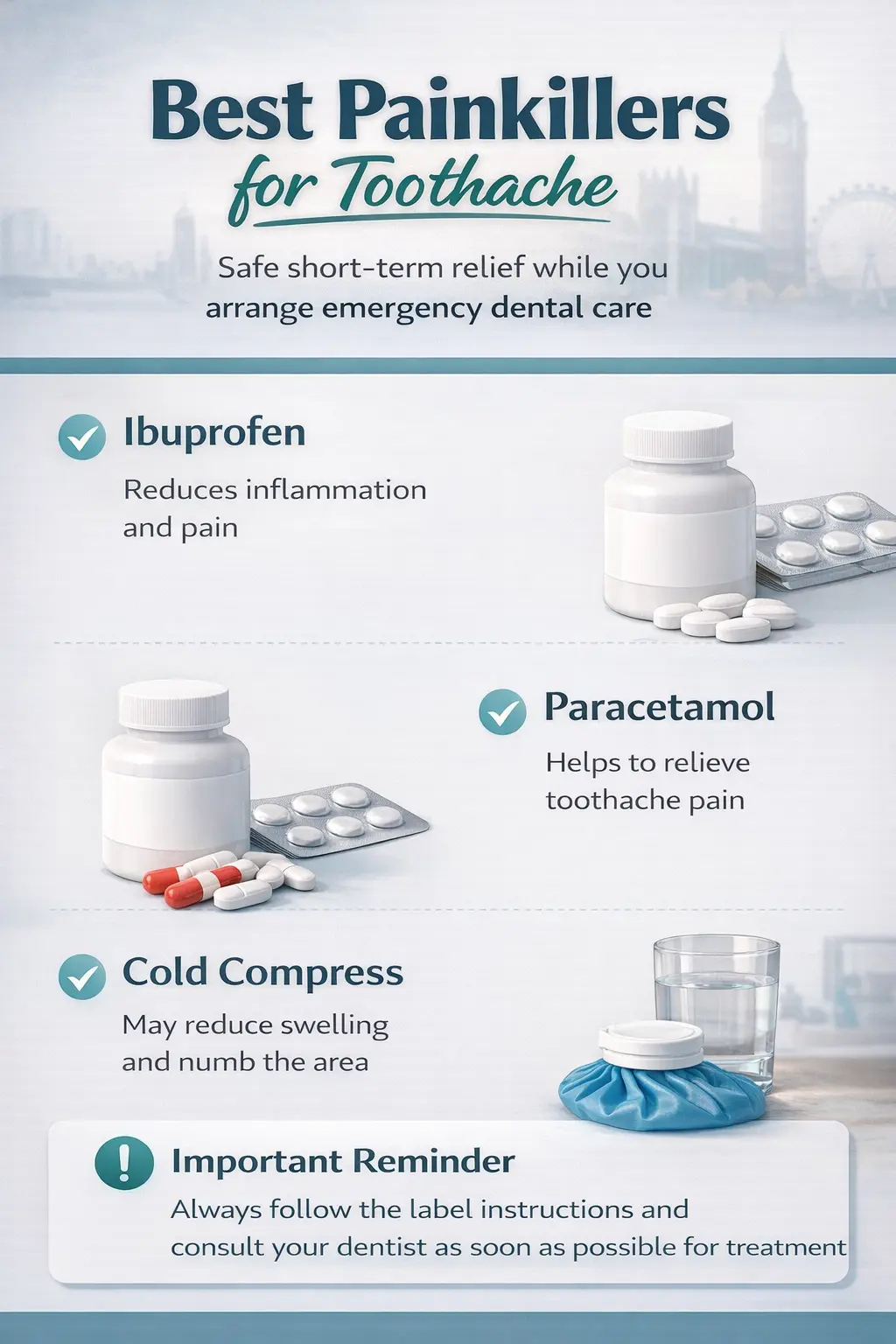
Over-the-counter painkillers can help reduce toothache while you wait for a dental appointment. The following are generally considered effective for dental pain:
Ibuprofen (e.g. Nurofen)
An anti-inflammatory painkiller. Often considered the most effective over-the-counter option for dental pain because it reduces both pain and swelling. Take with food. Not suitable for everyone — check with a pharmacist if you have asthma, stomach ulcers, or are taking blood thinners.
Paracetamol
Suitable for most adults and children. Can be taken alongside ibuprofen if one alone is not sufficient (but not at the same time — alternate them). Does not reduce inflammation but can help manage pain.
Ibuprofen and Paracetamol Together
Alternating ibuprofen and paracetamol can provide more consistent pain relief. For example, take ibuprofen, then two hours later take paracetamol, and continue alternating. Always follow recommended dosages on the packaging.
Important: What Not to Do
- • Do not place aspirin directly on the gum — this can cause chemical burns to the tissue
- • Do not exceed recommended dosages — always read the label
- • Do not give aspirin to children under 16
- • Do not rely on painkillers as a long-term solution — they mask symptoms but do not treat the cause
Home Remedies That May Help
While waiting for a dental appointment, the following measures may provide temporary relief:
- Saltwater rinse — dissolve half a teaspoon of salt in warm water and gently rinse. This can help reduce bacteria and soothe inflamed gums.
- Cold compress — hold a wrapped ice pack against the outside of the cheek for 15–20 minutes. This can help reduce swelling and numb the area.
- Elevate your head — when lying down, prop your head up with an extra pillow. This can reduce blood flow to the area and ease throbbing pain.
- Avoid triggers — stay away from very hot, cold, or sugary food and drinks until the tooth has been assessed.
- Clove oil — contains eugenol, a natural anaesthetic. Apply a small amount to a cotton ball and hold against the affected area. Use sparingly.
These measures are temporary. They may help manage discomfort but they do not address the underlying dental problem.
Dentist-Prescribed Pain Relief
If over-the-counter painkillers are not controlling your toothache, your dentist may need to prescribe stronger medication. Prescription pain relief is not available from a pharmacy without a clinical assessment — this is for your safety.
A dentist may prescribe the following, depending on the clinical findings:
- 1Stronger anti-inflammatories — higher-dose medication when standard ibuprofen is not managing the pain. Tailored to the individual based on medical history and other medications.
- 2Antibiotics — not painkillers, but may be prescribed if the toothache is caused by an active infection or dental abscess. Only prescribed when clinically appropriate — antibiotics should not be used unnecessarily.
- 3Codeine-based painkillers — for severe dental pain, a dentist may prescribe codeine or a codeine-paracetamol combination. These are short-term only, as codeine carries risks including drowsiness, constipation, and dependency. Not a first-line choice.
Why You Cannot Buy Stronger Painkillers Over the Counter
Prescription medications require a clinical assessment before they can be issued. This protects patients from potential side effects, drug interactions, and inappropriate use. If over-the-counter options are not controlling your pain, this is itself a reason to see a dentist promptly — both for stronger pain relief and to identify and treat the underlying cause.
When to See a Dentist
Some toothaches resolve on their own — for example, minor sensitivity after a recent filling. However, you should arrange a dental appointment if you experience any of the following:
Book a Routine Appointment
- • Mild sensitivity to hot or cold
- • Occasional dull ache that comes and goes
- • Pain when biting that settles quickly
- • Minor discomfort around a recent filling
Seek Urgent Dental Care
- • Severe, persistent pain lasting more than 48 hours
- • Facial swelling or swollen gums
- • Fever alongside tooth pain
- • Pain not controlled by over-the-counter medication
- • Pus or discharge from the gum
- • A broken or knocked-out tooth
If you are unsure whether your symptoms require urgent attention, our emergency dentist page provides further guidance. You can also contact the clinic directly for advice.
What Happens at a Dental Appointment for Toothache?
When you visit the dentist with toothache, the appointment will typically involve:
- 1Clinical examination — visual assessment of the teeth and gums to identify the source of pain
- 2X-rays — to check for decay, abscess, or damage below the gum line
- 3Diagnosis — your dentist will explain the cause and discuss treatment options
- 4Treatment — depending on the cause, this may include a filling, root canal, extraction, or prescription for antibiotics
Treatment recommendations will depend on the clinical findings. Your dentist will always explain the options and associated costs before proceeding.
How to Prevent Toothache
Most dental pain is preventable. Simple daily habits can significantly reduce your risk:
- Brush twice daily with fluoride toothpaste
- Clean between teeth daily with floss or interdental brushes
- Limit sugary food and drinks
- Attend regular dental check-ups — at least every 6 to 12 months
- Wear a mouthguard if you grind your teeth at night
- Do not ignore early symptoms — small problems are easier and less costly to treat
Conclusion
Toothache is your body's way of telling you something needs attention. Home remedies such as saltwater rinses and cold compresses can offer initial comfort. Over-the-counter painkillers — particularly ibuprofen — can help manage discomfort temporarily. And if those are not sufficient, your dentist can assess whether stronger, prescription-only medication is appropriate.
However, no painkiller — whether bought over the counter or prescribed — fixes the underlying problem. If pain is severe, persistent, or accompanied by swelling or fever, prompt dental assessment is important. Early treatment is almost always simpler, more comfortable, and less expensive than waiting.
If you are experiencing toothache and would like to arrange an assessment, contact our South Kensington clinic on 020 7183 2362 or visit our emergency dentist page for further information.
Disclaimer: This article is for general informational purposes only and does not constitute dental advice, diagnosis, or treatment recommendations. Every patient's situation is different. The information provided should not be used as a substitute for professional clinical assessment. Always read the patient information leaflet before taking any medication and consult a pharmacist or doctor if you are unsure whether a painkiller is suitable for you. South Kensington Medical & Dental is regulated by the Care Quality Commission (CQC). All dentists are registered with the General Dental Council (GDC).
Ready to Book an Appointment?
Our team is here to help you with all your dental and medical needs.










