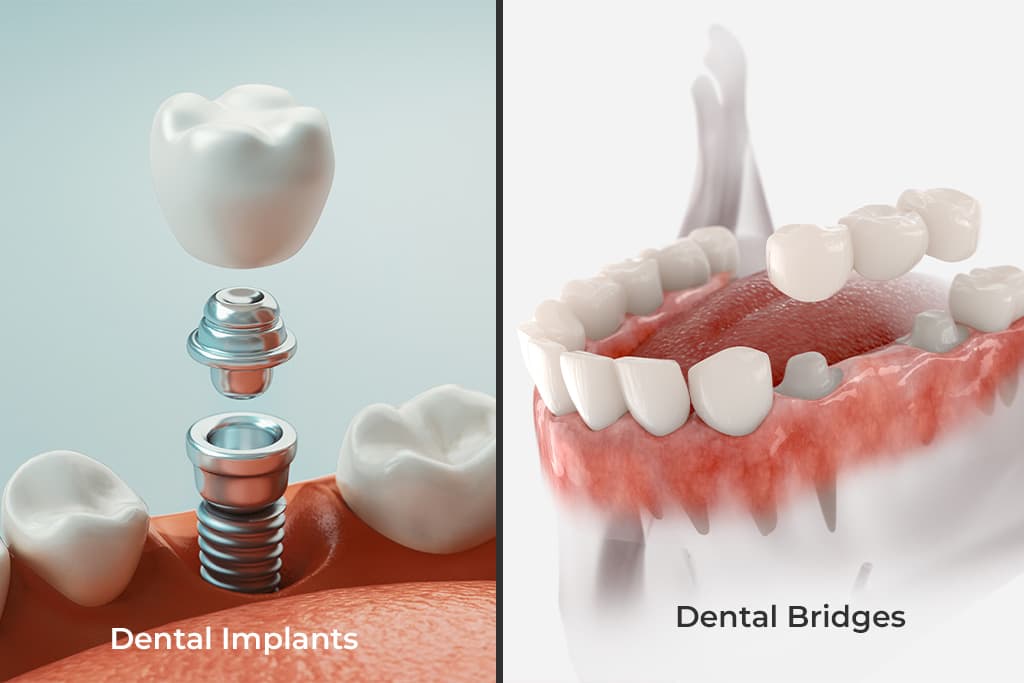
Dental Bridges vs Dental Implants: Which is the Right Tooth Replacement Option for You
Losing a tooth affects more than just your smile - it can influence how you speak, eat, and even your confidence. The good news is that with modern dentistry, you now have trusted long-lasting options for replacing a missing tooth. The two most common are dental implants and dental bridges.
Both options can restore your bite function and appearance, but they vary in terms of cost, durability and the procedure. To help you determine which option is better for your oral health and lifestyle, it is important that you understand the advantages and disadvantages of each.
What is a Dental Bridge?
A dental bridge is a fixed dental restoration used to replace one or more missing teeth. As the name suggests, this device works by bridging the gap between the natural teeth occurring on either sides of the missing tooth.
Components of a Dental Bridge
- • Pontic: The false tooth that goes in the gap
- • Abutments: The healthy teeth on either side of the gap acting as anchors, that hold the bridge in place with dental crowns
The Procedure
The procedure for getting a dental bridge usually involves two visits:
- Tooth Preparation: The abutment teeth are gently reshaped to support the crowns that will hold the bridge
- Impression and Fitting: An impression is collected first and a custom bridge is made to be cemented into place after it is fabricated
This makes dental bridges a less invasive and faster option compared to implants. However, it requires reshaping the adjacent teeth, which some patients prefer to avoid if those teeth are otherwise healthy.
What is a Dental Implant?
A dental implant refers to an artificial tooth root, typically made from titanium and placed surgically into the jawbone. Once the implant has fused with the jawbone through a process called osseointegration, a custom-made crown is attached on top to give a natural-looking tooth replacement.
The Process
- Consultation and Planning: Assessing the health of the oral cavity and jawbone density
- Implant Placement: Surgical placement of the titanium post into the jawbone
- Healing Period: The bone fuses with the implant in about 3 to 6 months
- Abutment and Crown: The abutment (a connector) and a custom crown are attached
Even though the dental implant process is long, it remains a permanent, independent tooth that just looks and feels like the real thing.
Dental Implants vs. Dental Bridges: Key Differences
2-3 wks
Bridge procedure
3-6 mo
Implant procedure
10-15 yrs
Bridge lifespan
20+ yrs
Implant lifespan
Adjacent Teeth
Bridge: Requires filing neighbouring teeth | Implant: Leaves adjacent teeth intact
Bone Preservation
Bridge: Does not prevent bone loss | Implant: Stimulates bone and prevents shrinkage
Cleaning & Maintenance
Bridge: Needs special flossing | Implant: Brush and floss like natural teeth
Cost
Bridge: Lower upfront cost | Implant: Higher upfront cost but longer lifespan
Benefits of a Dental Bridge
Faster Procedure
A bridge typically takes just a few weeks to be fitted. This can be beneficial for individuals looking for faster treatment.
No Surgery Needed
Bridges don't involve any surgery or the need for bone integration, and so may be more suitable if you have a medical condition.
Lower Initial Cost
The cost for a dental bridge has overall less initial cost when compared to an implant, particularly if more than one tooth is missing.
Aesthetic Improvement
Modern porcelain and ceramic bridges are designed to blend in well with your existing teeth and restore your smile.
Important Note
Bridges depend on the support and strength of neighbouring teeth. Over time, the teeth used as bridge supports may get weaker or require treatment, like fillings or crowns.
Benefits of Dental Implants
- Strength and Longevity: Dental implants inserted into the jawbone are the most durable tooth replacement option. When properly cared for, they can last a lifetime.
- Helps Preserve Facial Structure and Jawbone: Implants act as natural roots and help keep the bone intact and healthy, preserving the natural structure and shape of the face.
- No Effect on Adjacent Teeth: A tooth implant can be installed without adversely affecting the adjoining teeth. Each implant acts on its own.
- Simple Maintenance: You need to brush and floss the implants just like your natural teeth, and you do not need any additional tools for cleaning.
- Functions and Feels like Natural Teeth: Implants are fused to the bone, which provides exceptional stability for speaking and chewing.
Not sure which option is best for you? Book a private dental consultation at South Kensington MD.
Book ConsultationPotential Drawbacks
Both bridges and implants are very good options, but they do have limitations.
Bridges
- • Not as durable as implants
- • May result in sensitivity or decay in the abutment teeth
- • Does not prevent the jawbone from dissolving under the missing tooth
Implants
- • May need adequate jawbone for placement
- • Healing can take several months
- • Bigger initial investment than that of a bridge
With that said, dental implants may incur higher cost initially but could save you more money in the long run since they rarely have to be replaced.
Which Option is Suitable for You?
Deciding on the best option for you will depend on various factors:
1. Oral Health and Bone Density
If you have a sufficiently healthy jawbone and better bone density, dental implants are the best choice for a long-term solution. If bone density has already been lost, you may require additional procedures such as bone grafting.
2. Number and Position of Missing Teeth
Bridges are generally used to replace one or two adjacent teeth; while implants are more effective in replacing a single tooth or for multiple replacement as well - regardless of their position in the mouth.
3. Budget and Timeline
If your top priority is the cost or duration of treatment, bridges may be a quicker and initially less expensive solution. However, over time, implants may ultimately be more cost-effective due to their longevity.
4. General Health and Lifestyle
Ideal candidates for implants generally include non-smokers with consistently good oral hygiene habits. Patients with chronic health issues (such as diabetes) should discuss concerns during a thorough dentist consultation before making a decision.
A Combined Alternative: Implant-Supported Bridge
For patients with multiple missing consecutive teeth, an implant-supported bridge is made to not be anchored to natural teeth and depends solely on implants to support the bridge structure. This offers better stability while using fewer implants.
Aftercare and Maintenance
No matter which option you pick, proper maintenance is essential to supporting its long-term success.
- Brush your teeth twice daily with fluoride toothpaste
- Use a flossing device or interdental brushes to keep the bridge or implant clean
- Avoid chewing hard foods that may damage the restorative material
- Continue visits to your dentist bi-annually for cleanings and check-ups
Good oral hygiene and professional care will ensure restorations such as implants and bridges can last for several years.
Conclusion
When it comes to dental implants vs. bridges, there is no universal solution.
- If you are looking for the most natural, durable and long-lasting option, go with dental implants
- If you prefer a non-surgical, quicker and inexpensive dental treatment, go with a dental bridge
No matter how you assess your situation, professional guidance is crucial. Book a private dental consultation at South Kensington MD and one of our expert dentists will guide you through every step and help you regain your confident smile.
Ready to Book an Appointment?
Our team is here to help you with all your dental and medical needs.










